















ADVICE
Preparing for a long sea voyage cannot be improvised. From choosing the right boat to gathering essential equipment, technical preparation, and safety, every detail counts. We support sailors in their projects with sound advice and proven expertise. Discover our recommendations for making the right choices and sailing with peace of mind.
%20(1).png)

How to Maintain an Aluminum Sailboat: A Structured Approach for Bluewater and World Cruising
Why Maintenance Is Essential for an Aluminum Sailboat in Bluewater Cruising
Aluminum is a material particularly well suited to offshore sailing and long-range cruising. Its structural behavior is unique: in the event of an impact, it can deform without tearing, preserving the integrity of the hull.This charactistic is especially valuable when sailing in remote regions or areas where charts may be incomplete. It allows crews to move forward with a higher level of confidence, knowing that the boat is designed to absorb uncertainty rather than amplify it.Another essential advantage is reparability. Aluminum can be repaired almost anywhere in the world, making it particulary relvant for global cruising projects.
Like any sailboat, an aluminum sailboat requires proper maintenance. The difference lies in its nature. Maintenance is not about multiplying interventions or increasing complexity. It is about focusing attention on specific areas primarily corrosion and maintaining control through regular, methodical checks.
%20(1).png)
Understanding Aluminum and Corrosion: A Necessary Foundation
What is corrosion? A simple and technical definition
Corrosion is a natural electrochemical process inthrough which a metal gradually degrades when exposed to oxygen and moisture. In a marine environnement, this process is intensified by the presence of salt, which facilitates electrical exchange.<br>In practical terms, the metal behaves like a small electrochemical system:<br>One area becomes the anode, losing electrons and oxidizing.<br>Another becomes the cathode, remaining protected<br><br>
The loss of electrons at the anode leads to the formation of metal oxide, which is the visible expression of corrosion. Even without direct contact, different materials immersed in seawater can interact electrically due to differences in potential. The less noble material releases ions and deteriorates, while the more noble one remains stable.
What Defines a Noble Metal?
The concept of a "noble metal" is central to understanding corrosion on an aluminum sailboat. Nobility is not related to mechanical strength, but to resistance to oxidation:
- Stainless steel is more noble than copper.- Copper is more noble than aluminum.- Aluminum is more noble than zinc.
The hierarchy explains the use of sacrificial anodes, typically made of zinc or magnesium. These components are intentionally designed to corrode in place of more critical parts of the boat, such as the aluminum hull.
Aluminum's Natural Protection Mechanism
Aluminum has one key characteristic: it protects itself naturally through the spontaneous formation of a thin layer of aluminum oxide when exposed to air—known as alumina. This layer acts as a protective barrier as long as it remains undisturbed.
On an aluminum sailboat, corrosion occurs only when the equilibrium between materials is disrupted, for example due to incompatible metals, stray electrical currents, or damaged surface protection.
.jpg)
Galvanic vs. Electrolutis Corrosion: Two Distinct Mechanisms
Two types of corrosion must be clearly distinguished:
Galvanic corrosion, caused by the interaction of dissimilar metals in seawater
Electrolytic corrosion (stray current corrosion), caused by unintended electrical currents
Electrolytic corrosion is often less visible initially but can be significantly more destructive. It is commonly linked to:
Improper grounding.Faulty wiring Poorly protected shore power connections
For long-range cruisers and liveaboard sailors, understanding and controlling these mechanisms is essential.
Best Practices for Maintaining an Aluminum Sailboat
Regular inspections: The Foundation of Reliability
Regular inspections are the cornerstone of aluminum sailboat maintenance. A monthly visual inspection allows early detection of anomalies before they develop into structural concerns. A comprehensive annual inspection, ideally during haul-out, provides the opportunity to examine: Underwater hull areas Welds and structural joints Appendages such as keel and rudder This disciplined approach reflects a broader cruising philosophy: anticipating issues rather than reacting to them.
Cleaning and Surface Care: Preserving Without Aggression
An aluminum sailboat should be cleaned regularly but gently. A simple rinse with fresh water is sufficient to remove salt deposits. The products used should be pH-neutral and safe for aluminum.
Electrical System Monitoring: A Critical Priority
The electrical system plays a key role in preventing corrosion. Connections must be checked regularly, ground loops must be balanced, and batteries must be monitored. Electrical faults are one of the leading causes of premature corrosion on aluminum sailboats.
Sacrificial anodes are designed to protect the aluminum hull by corroding in its place
sacrificial anodes protect the hull by corroding in its place. Their galvanic potential and weight are calculated based on the boat’s hull shape and the amount of material to be protected, and verified on the first unit. A galvanic test is also performed when a new unit is launched. For the hull and keel, these are magnesium sacrificial anodes . For electrically isolated components, such as the stainless steel propeller shaft or the propellers, the sacrificial anodes of zinc alloy.
They must be inspected regularly and replaced once a year for sacrificial anodes and keel sacrificial anodes , and twice a year for sacrificial anodes .
In any case, the limit that must not be exceeded is 50% anode wear.
The wear of sacrificial anodes an aluminum sailboat depends heavily on its environment. In marinas, the presence of stray currents and metal infrastructure accelerates their consumption, whereas in the open sea it remains more stable. Conversely, in areas with granite seabeds, such as in Brittany, France, the low conductivity of the substrate slightly limits electrochemical reactions. In freshwater, such as in rivers, sacrificial anodes much more slowly due to the low salinity.
%20(1).png)
Antifouling Systems Compatible with Aluminum
Choosing the right antifouling paint is essential for an aluminum hull. Traditional copper-based antifouling paints are completely incompatible with aluminum and can cause severe galvanic corrosion.
A proper antifouling system must include a perfectly continuous epoxy primer coat, as well as a copper-free antifouling paint specifically formulated for aluminum.
Commun Mistakes to Avoid
The use of incompatible metals, the application of unsuitable antifouling paint, neglect of the electrical system, the use of harsh cleaning products, and the lack of regular inspections are among the most common mistakes.
Aluminum Sailboat Maintenance Checklist
Apart from following the recommended guidelines for sacrificial anodes, an aluminum sailboat does not require any special maintenance. It is, of course, recommended to regularly check the bottom of the boat for moisture and to dry it out if necessary.
It is important to monitor the electrical system of an aluminum sailboat to detect any potential leaks that could accelerate corrosion. This is especially important during a round-the-world voyage, following periods when the boat has been unattended. Similarly, after an electrician or mechanic has worked on board, be sure to use this tester to ensure that their work has not caused any issues.
When it comes to maintaining or simply cleaning the aluminum hull, you can use a restoration product, provided you make sure it isn’t overly harsh and follow the instructions carefully.
Finally, as with any sailboat—whether aluminum or not—it is recommended that you regularly perform a visual inspection of the rudder and steering systems, especially before long voyages.
Why Allures Yachting Expertise Makes Maintenance Simpler
To protect against corrosion, Allures Yachting sailboats are designed withsacrificial anodes installedsacrificial anodes several locations on the hull. The recommended replacement intervals are specified in the owner’s manual.
The shipyard also takes special care to ensure that any parts of the boat made of a metal other than aluminum never come into direct contact with the hull. For example, the railings (balconies and stanchions) and the deck fittings are all isolated from the aluminum by plastic backing plates, bushings, or washers. This eliminates any mechanical or electrical connection between the aluminum and stainless steel, thereby preventing electrolysis.
The electrical circuits are installed with the utmost care and include numerous protective measures: cable trays, surge protectors, conduit, and a gel-box enclosure to protect the connections.
Allures sailboats are also equipped with a bipolar DC circuit: the negative circuit is completely isolated from the hull structure.
And to check for any electrical leaks, which could lead to electrolytic corrosion, Allures sailboats are equipped with a leak detector. This tester measures for any leakage current between the battery and various test points. With the push of a button, you can ensure that the electrical system is free of leaks.
Finally, to prevent electrolytic corrosion in marinas—especially when the boat is connected to the dock’s 220-volt power supply—our Allures sailboats are equipped with an automatic isolation transformer. In addition to regulating the voltage without changing the frequency, it protects the hull from any potential leakage current.
.jpg)
Conclusion: Long-Term Performance Through Controlled Maintenance
A well-maintained aluminum sailboat offers a unique combination of durability, reliability, and freedom.By understanding corrosion mechanisms and applying consistent best practices, owners can rely on a vessel that remains structurally sound and comfortable over decades of use.Maintenance is not a bruden. It is a structured, predictable process that supports confidence at sea an essential foundation for any bluewater or world cruising project.
FAQ: Your Questions About Maintaining Aluminum Sailboats:
How do the stainless steel components coexist with aluminum hull?
They are systematically isolated using dedicated materials, preventing any direct contact and eliminating galvanic interaction.
How are electrical systems protected onboard?
Through insulated routing, protective conduits, and sealed connection systems.
How can stray currents be detected?
With onboard leakage detectors that measure current between the battery and control points.
Why use a bipolar electrical system?
Because it prevents the hull from acting as a return conductor, eliminating a major source of corrosion.
Any other questions? Check out the FAQ!
%20(1).avif)
Why choose an Aluminum Hull Sailboat for Bluewater Cruising?
Aluminum hull sailboat: safety first
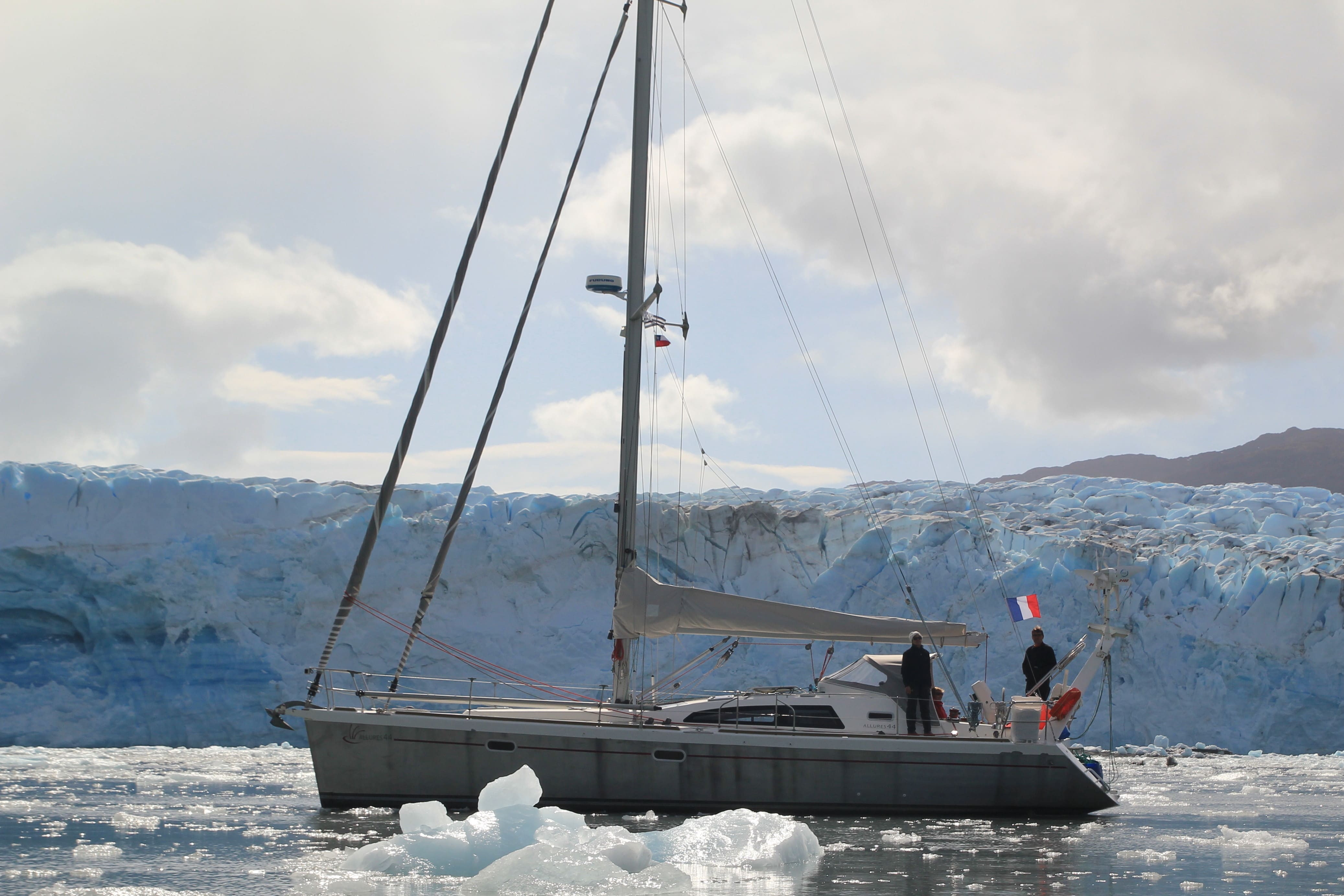
The primary reason for choosing an aluminum sailing yacht for bluewater cruising is undoubtedly safety. Long passages, poorly charted areas, unexpected encounters, potentially harsh conditions, and navigating in ice all demand exceptional hull strength. The robustness of an aluminum hull provides genuine reassurance to aspiring circumnavigators.

Impact Resistance and Reinforced Protection
One of the major advantages of an aluminum hull is its ability to withstand impact. The greater ductility of aluminum allows for much greater deformation of the material before it breaks. Conversely, GRP composites are more rigid and therefore less flexible: they tear or break more suddenly in the event of impact.
Enhanced Safety when Facing the Unexpected
A sailboat with an aluminum hull therefore offers greater safety and peace of mind when faced with the possibility of unforeseen events at sea. The recent example of interactions with killer whales in the North Atlantic is very telling: the repeated movements on the rudder that they generate put sudden stress on the hull. Composite materials absorb these shocks poorly and unfortunately break or delaminate, causing leaks. On Allures ocean-going sailboats, the rudder stock tube through which the rudder stock passes through the hull is welded to the aluminum hull. The risk of damage to the hull in this area due to orcas is virtually zero.
Aluminium Thickness in Yacht Building
Aluminum alloys are classified into series according to their composition, their characteristics, and therefore their recommended uses:
- 1000 series aluminium, over 99 percent pure, is mainly used for electronics and packaging.
- 2000 series aluminium copper alloys are widely used in aeronautics.
- 5000 series (aluminium-manganese) and 6000 series (aluminium-silicon-manganese) are used in marine applications thanks to their high mechanical strength, excellent weldability, and outstanding corrosion resistance, which is essential in a marine environment.
At the French shipyard Allures Yachting, the structural elements of our monohulls (frames, stringers, bottom, reinforcements) are made from 6005, 6060, and 6082 alloys, which are very rigid, particularly in profiles. These alloys are therefore used for extruded profiles and machined parts in the structure of sailboats.
For the plating, the outer skin of the hull, the shipyard uses 5000 series alloys, which are highly ductile, as required for forming a hull without a sheer, while also offering very high mechanical strength, even when welded.

Understanding the Mechanical Strength of Aluminium
Mechanical strength is measured in megapascals (MPa). 1 MPa equals the pressure of a 10 kilogram force applied to 1 square centimetre. 250 MPa equals the pressure of 250 tonnes on 1 square metre.
However, a material's mechanical strength is not just a single number, but a set of behaviours observed under force. Among these, two key reference points are: Yield strength (Re): the limit up to which the material returns to its original shape, beyond this, permanent deformation occurs. Tensile strength or Ultimate Tensile Strength (Rm): the maximum load the material can endure before breaking, it's ultimate load.
Comparing the Mechanical Strength of Aluminum and Composite
Highly resistant, an aluminum hull is above all ductile: it dents, bends, absorbs energy, and provides visible warning signs (such as buckling).
Composite, on the other hand, reaches a sharper point of failure, with cracking or delamination and local collapse of the sandwich structure. Energy absorption depends on skin and core thickness. GRP is more rigid and therefore less flexible, tearing or breaking more abruptly on impact.
Mechanical strength values
For a hull, however, strength is not assessed by MPa alone but by the ability of a complete plate to absorb impact, a capacity influenced by thickness, shape (curvature), and internal stiffening (frames, beams, floors).
Thicker plating resists puncture better, dissipates more energy, and bends rather than tears. Mechanical loads are distributed across both the plating and the structure. Curved, stiffened hulls further multiply resistance. One of the advantages of an aluminum hull is its ability to deform rather than crack, a vital safety feature in bluewater cruising.
On Allures aluminum monohulls, depending on the model, plating thicknesses are: 8-10 mm for the bottom and immersed sections, 10-12 mm for internal reinforcements, 5-6 mm for the topsides.
With a tensile strength of over 300 MPa, more than 300 tons would need to be applied to 1 m² to cause the aluminium hull boat to break.
A Well-Designed, Well-Built Aluminium Hull Remains Light
Aluminum has a density of 2.7 g/cm3, far lower than steel (7.85) and only slightly higher than composite (1.5-2). Yet, for an equivalent structural design, aluminum hulls can be lighter than conventional GRP hulls because they do not require very thick skins or heavy reinforcements to achieve excellent strength. And this is even more true for yachts over 40 feet.
Allures sailboats combine a robust aluminum hull with a strong, lightweight composite deck. The 14 and 16 metre bluewater models from Allures Yachting therefore match the weight of similarly sized composite yachts. With hulls designed by renowned naval architect Olivier Racoupeau, Allures aluminum monohulls also deliver exceptional performance.
Discover the architect's vision in this video:
Recyclability of an Aluminum Sailboat
Beyond its strength, aluminum is a durable and recyclable material. The aluminum used by Allures Yachting is made from around 80% recycled aluminum, itself fully recyclable. When properly maintained, an aluminum hull sailboat retains its mechanical properties for decades and offers outstanding corrosion resistance, a significant advantage for environmentally conscious sailors.
The aluminum used by Allures Yachting made from 80% recycled aluminum.
Repairability anywhere in the world
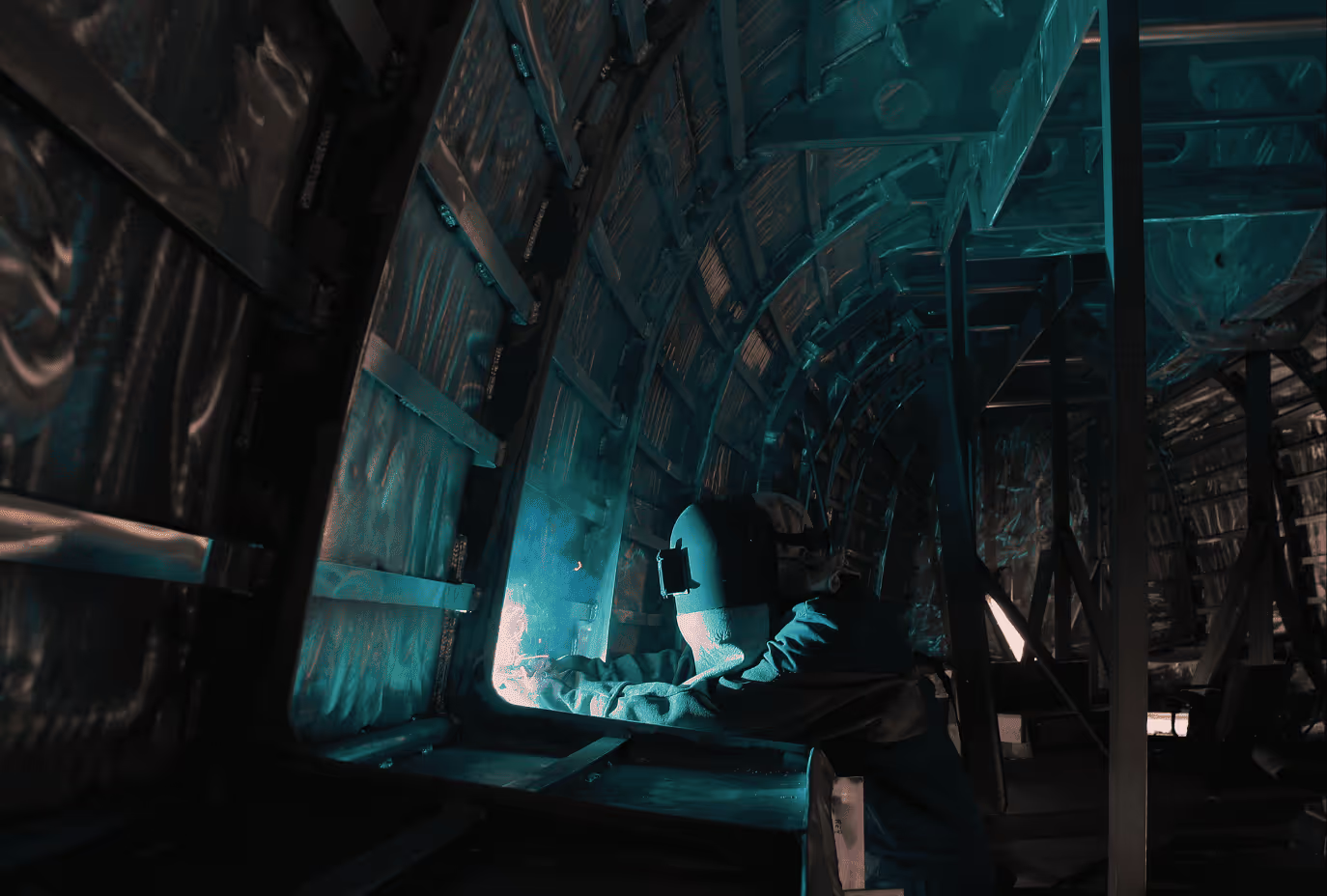
Another major advantage of aluminum boat hulls is their ease of repair. Aluminum can be repaired almost anywhere, even in remote regions, without sophisticated equipment.
Any competent welder can carry out at least a temporary repair without being a marine specialist. And welders can be found all over the world. Simple, watertight aluminum patches can be welded on anywhere, keeping the voyage going.
Repairing a composite hull, by contrast, requires genuine specialists, resins, chemical catalysts, and very precise temperature and humidity conditions.
Aluminum Hull: Peace of Mind at Sea
Choosing an aluminum hull sailboat means opting for a safe, durable travelling companion, ready to face any horizon. Thanks to its remarkable impact resistance, its ability to deform without breaking, and its repairability all around the world, aluminum remains the most reliable material for sailing far and for many years.
Light, robust, recyclable, and built to last for decades, an aluminum hull boat offers unmatched peace of mind to demanding sailors.
This philosophy, focused on safety and performance, has Allures Yachting guided Allures Yachting : designing aluminum sailboats capable of taking their crews with confidence to the most ambitious destinations.
Discover our full range of aluminum offshore sailboats: Allures 40.9 - Allures 45.9 - Allures 51.9 - Horizon 47
Frequently Asked Questions
Why is an aluminum sailboat ideal for the " bluewater cruising "?
Its impact resistance provides a high level of safety and therefore greater peace of mind when blue water cruising. It can also be easily repaired anywhere in the world.
How do aluminum sailboats perform in the event of a collision?
Aluminum is on average three times stronger than composite and ductile. In the event of an impact, aluminum will absorb energy much better and may deform but will not break.
Do aluminum sailboats require special maintenance?
Aluminum sailboats simply require special attention to the life of their sacrificial anodes the proper functioning of their electrical circuit to ensure that there are no electrical leaks.
What are the differences in behavior between aluminum and composite?
Aluminum has an average tensile strength three times greater than that of composite materials. It is ductile and can withstand deformation before breaking, whereas composite materials, which have no real elastic limit, will delaminate or break suddenly upon impact.
Why choose an aluminum centerboarder sailboat centerboarder?
Due to the rigidity of its structure, an aluminum sailboat is particularly well suited for centerboarder. Installation of the system is easier and safer. And the boat can be beached more safely.
Can't find the answer to your question? Check out our FAQ.

Why choose a centerboarder for bluewater cruising?
Choosing the right sailboat means first and foremost clearly defining your plans.
When choosing a sailboat from bluewater cruising, every prospective buyer asks themselves: Where will I be sailing? What will my sailing itinerary be? Will I face very challenging weather conditions? Will I mainly use marinas or wild anchorages? For how long? With what crew?
These questions naturally lead to critical architectural decisions, including the type of hull. Among the possible solutions, the “ centerboarder ” stands out for its adaptability and suitability for bluewater cruising. That is why Allures Yachting is sharing the advantages of this configuration in this technical spotlight.
centerboarder : A Major Asset for the bluewater cruising
Highly appreciated by long-distance sailors, the centerboarder three key advantages:
- Access to shallow areas: wild anchorages, shoals, drying out
- Enhanced safety: consistent stability, reliable performance even when drift is detected
- Comfort and stability at sea: smooth movements, moderate heeling, peaceful sailing
Navigate freely, regardless of depth
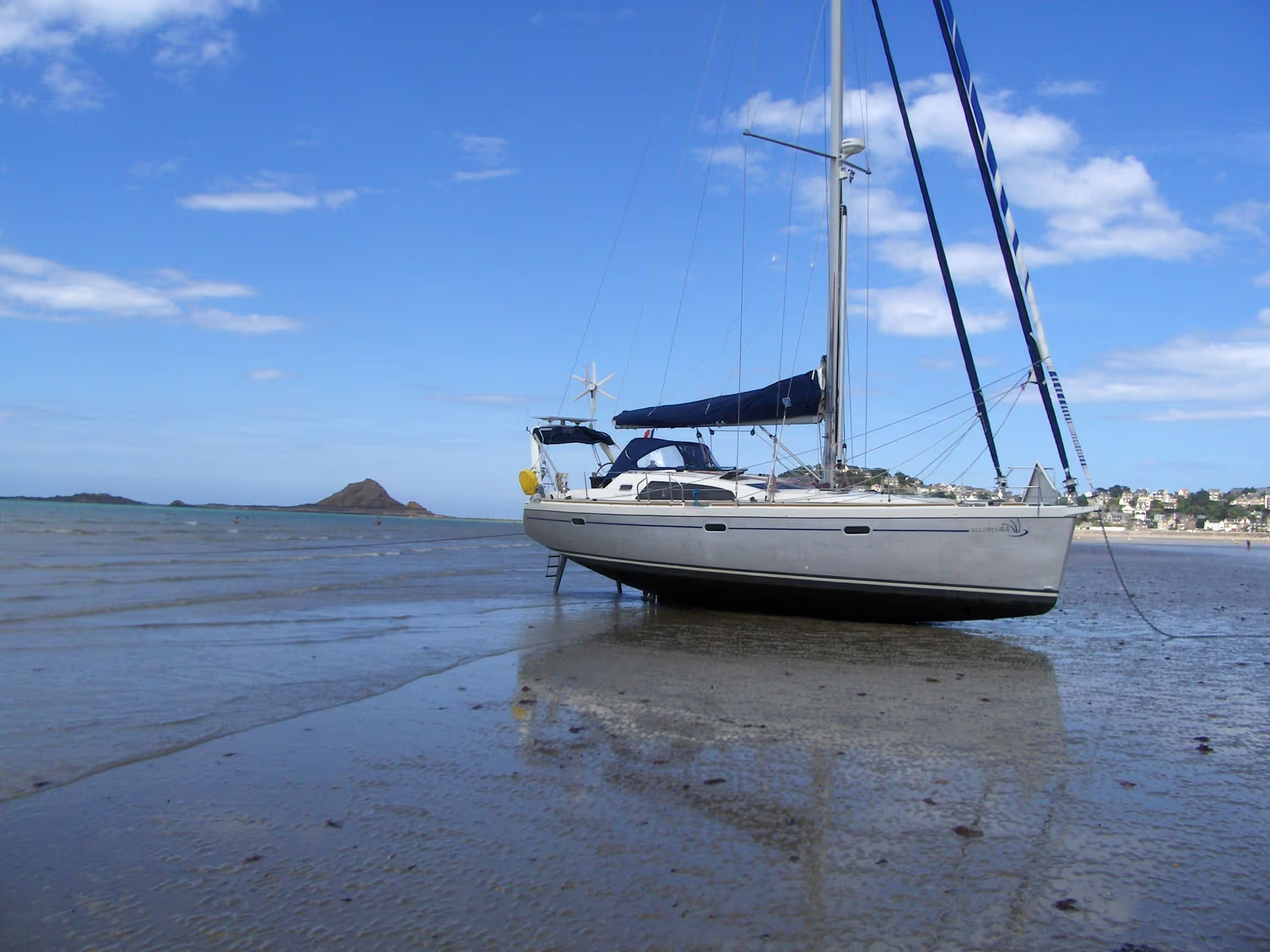
The main advantage of centerboarder is the freedom to sail where others cannot go. Thanks to its reduced draft, you can access:
- wild anchorages and isolated shelters,
- areas that are poorly mapped (corals, shoals, ice),
- the possibility of voluntarily running aground for a technical inspection.
This ability to get as close as possible to the coastline—while maintaining a safe and reliable design—is a real differentiator.

Stability and comfort: a hull designed for serenity
The centerboarder a higher center of gravity, offset by a generous beam and a carefully designed displacement. The result:
- smooth movements,
- moderate lodging,
- comfort at sea and at anchor,
- reassuring behavior in cross waves.
On an Allures, the solid aluminum centerboard does not add unnecessary weight. Its stability remains constant, even with the centerboard raised or removed, which is a strong argument in the event of an incident at sea.
Consistent performance at all speeds
Contrary to popular belief, a centerboarder performs well:
- good upwind performance, thanks to a refined centerboard profile,
- best downwind speed with the centerboard raised, with less drag,
- better balance of the bar, ideal for autopilot.
In severe conditions, the ability to take down the cape or flee high drift significantly improves safety: the boat can slide sideways without risking the dreaded "trip" of fixed keels.
In conclusion: the right choice for exploring differently
The centerboarder, as we conceive it at Allures Yachting, opens up new horizons for sailors: inaccessible areas, enhanced safety, comfortable sailing, and peace of mind in heavy weather.
It is a technical solution favored by demanding sailors—those who see long-distance travel as a quest for controlled freedom.
Read more
Twin rudders centerboarder essential technical choices for bluewater cruising - Olivier Racoupeau's vision [Episode 1/4]
On board a blue water yacht, every design decision counts. This instructional video addresses two fundamental elements of Allures' DNA:
- The centerboarder, which not only allows access to remote anchorages, but above all enables the boat to dodge certain waves by deliberately skidding, avoiding the dreaded tripping effect caused by fixed keels.
- The twin rudders, now widely adopted on modern sailboats, for its smooth steering, efficiency under autopilot, and safety in strong winds or when luffing up.
These choices, once reserved for ocean racing, are standard features on Allure boats because they meet the specific requirements of our sailors: to set sail far away, for long periods of time, and with complete confidence.
Bonus
This video is part of a series of four episodes designed to provide a better understanding of Allures' technical approaches.
Discover episode 2: Hull, stability, displacement: what are the secrets to a comfortable sailboat?

Hull, stability, displacement: what are the secrets to a comfortable sailboat, according to Olivier Racoupeau? [Episode 2/4]
Designing a sailboat for bluewater cruising means aiming for more than just technical balance: it means ensuring a high quality of life at sea, over the long term. In this video, Olivier Racoupeau details three fundamental pillars of the Allures philosophy:
- An optimized hull: the length at the waterline is designed to maximize average cruising speed while ensuring good stability when the boat is underway. No need to constantly restart: the boat maintains its speed naturally, even under autopilot.
- Tailor-made stability: today, stability is no longer determined solely by ballast. Waterline width, superstructure volume, freeboard... everything is calibrated to ensure both stability at small angles (comfort when sailing) and ultimate stability (safety in heavy weather).
- A design consistent with the program: An Allures sailboat is designed from the outset to carry heavy cargo (water, fuel, equipment, exploration gear, etc.). The result is a stable, predictable, and comfortable boat, even when fully loaded.
The goal? To give the crew the chance to continue living normally at sea: cooking, sleeping, spending time together—without being constantly preoccupied with the boat. Because a true “ bluewater cruising ” sailboat isn’t judged by its top speed, but by its consistency, ease of handling, and comfort in the real life of the open sea.
The goal? To give the crew the opportunity to continue living normally at sea.
Bonus
This video is part of a series of four episodes designed to provide a better understanding of Allures' technical approaches.
Check out Episode 3: Sail Plan: What Architectural Choices Lead to Greater Efficiency in the “ bluewater cruising ”?
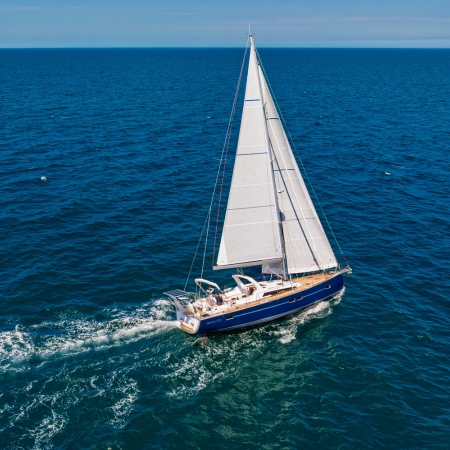
Sail plan: what architectural choices will improve efficiency in bluewater cruising - Olivier Racoupeau's vision [Episode 3/4]
A well-designed sailboat starts with a coherent sail plan. In this episode, Olivier Racoupeau shares his approach to balancing efficiency, balance, and ease of use:
- Effective sail area vs. displayed area: not all meters are equal. Actual performance depends on the projected area, not just the total figure. The goal: less sail, but better use of it.
- Rigging developments: no more genoa . Angled spreaders, widely spaced chain plates, and a mast improve stability, reduce pitching, and allow for simpler, more efficient sails.
- Continuity of transitions: to ensure good performance under sail, the transitions between genoa, gennaker staysail carefully designed to avoid any "gaps" in power between configurations.
- Reduced use of reefed sails: by anticipating optimal operating ranges during the design phase, it is possible to minimize the use of furling sails, extending their service life and facilitating navigation.
In short, a good sail plan means less surface area, but better performance and, above all, a sailboat that is easy to handle, even with just two people. This philosophy guides every Allures design from the drawing board onwards.
Bonus
This video is part of a series of four episodes designed to provide a better understanding of Allures' technical approaches.
Discover episode 4: Composite deck on aluminium hull why does this combination make sense according to Olivier Racoupeau?
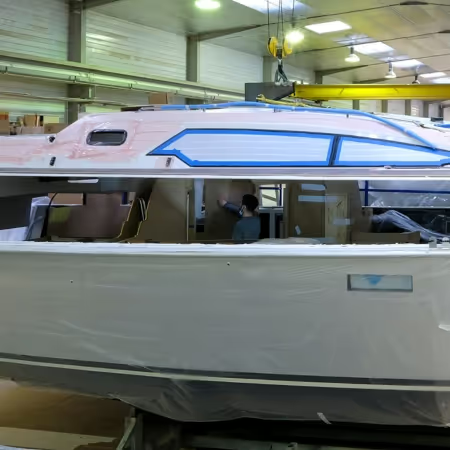
Composite deck on aluminium hull why does this combination make sense according to Olivier Racoupeau? [Episode 4/4]
The real advantages of a composite bridge
On a sailboat, the deck is never an impact zone: all potential energy is absorbed by the hull. This opens the door to a different material for the upper part—and that's where composite shows its full potential.
Why choose a composite bridge?
- Integrated insulation: the sandwich structure provides natural thermal and acoustic insulation. The result: immediate comfort, summer and winter alike.
- Reduced weight: compared to an all-aluminum construction, the weight savings improve performance and make maneuvering easier.
-Durable non-slip surface: molded into the material, without extra thickness or bonding, it is more resistant to wear and tear and requires little maintenance.
- Optimized design: the composite allows for fluid, ergonomic shapes, designed for natural movement and harmonious integration of equipment.
- Increased usable volume: lighter, larger, and better insulated storage compartments—a real asset for long journeys.
The choice of demanding sailors
Combining an aluminum hull (durability, safety, serviceability) with a composite deck (lightweight, insulation, aesthetics) offers the perfect balance. This combination of materials delivers both performance at sea and a high quality of life on board, without compromise. It is a well-considered choice, designed for those who sail far, for long periods, and in a variety of conditions.
The Allures Council
For an offshore program, the combination of aluminum and composite is ideal: it maximizes safety, thermal comfort, and functionality on board. This duo reflects our philosophy: sturdy, comfortable, and elegant sailboats designed to explore the world with complete peace of mind.
Bonus
This video is the last in a series of four episodes designed to provide a better understanding of Allures' technical approach.
See also: Why Choose a centerboarder for the bluewater cruising ?
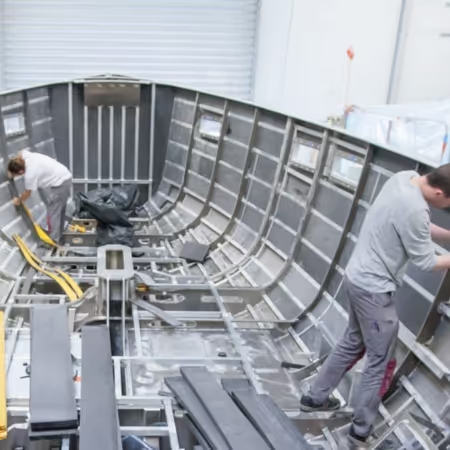
Aluminum & electrolysis: understanding and preventing corrosion on your sailboat
Aluminum boats: the choice of robustness
Three times lighter than steel, aluminum is the material of mobility. Used in the aerospace, automotive, rail, and marine industries, it has been the standard of choice for the hulls of bluewater cruising sailboats for over 50 years. Its durability, recyclability, impact resistance, and low-maintenance nature make it an ideal choice for long-distance sailors.
But what about electrolysis in all this?
If you mention aluminum in a port, there is always someone who will express concern about electrolysis. But what does this word really mean?
In reality, the term electrolysis is often used incorrectly. It covers two very different phenomena:
- Galvanic corrosion
- Electrolytic corrosion
Understanding them is already preventing them.
Galvanic corrosion: a story of metals
Galvanic corrosion results from the contact of different metals immersed in the same electrolyte, in this case seawater. A weak electric current flows, causing gradual attack on the less noble metals.
The solution: sacrificial anodes .
sacrificial anodes deliver a natural protective current that counteracts the corrosion current. Their effectiveness can be measured accurately using appropriate tools.
Electrolytic corrosion: beware of leakage currents
Electrolytic corrosion is caused by accidental electrical current (leakage current) coming from the shore or dock. This additional current accelerates corrosion at the point of exit to the sea, depending on its polarity.
The solution: rapid detection and neutralization of leakage currents through regular monitoring of the electrical system.
Integrated expertise at Allures Yachting
At Allures Yachting, we go far beyond the standards. Our design office includes electrical engineers who ensure that each sailboat is designed to remain protected from these phenomena.
- Rigorous electrical assembly
- Installation and monitoring of sacrificial anodes
- Periodic leakage current testing
Tip: Replace your sacrificial anodes are more than 50% worn to ensure their effectiveness.
Anticipate to navigate with peace of mind
Electrolysis is not inevitable. It is a well-understood phenomenon that can be controlled, provided you follow a few simple rules and remain vigilant. A well-designed, well-maintained boat will take you far, for a long time, and with complete confidence.