
















Caribbean Warmth and Cuban Resilience—On board their Allures 45, Anne and Hugues share their experience with us
The freedom of your sailing yacht enables you to sail wherever you want. Really, "wherever"?! We again talked to Anne and Hugues, who sailed their Allures to one of the most requested destinations in the Caribbean: the island of Cuba. Here's all you need to know...

To make things short: "No!" This is the summary of VANUILY crew Anne and Hugues, a couple you've probably read about when we talked to them about their sailing adventures in West Africa. As this experienced sailing couple keeps taking their Allures to some of the most sought-after and dream destinations, we took the opportunity to talk to them about their sailing adventures in Cuba.Cuba, it seems, is a double-edged sword: a dream destination, a place that many people long to visit and one that is often romanticized. On the other hand, Cuba's history is marked by hardship, sanctions and even war, making it a country deeply shaped by politics.
Nevertheless, as Anne and Hugues assert: It indeed is a dream destination and worth a visit. Even now, with sanctions hitting most hard, local people welcome every single traveler and visitor, as it helps them to make a living. Hugues confirms: Tourists from western countries don't need to fear anything at all! On the contrary: In Cuba, Caribbean friendliness and a heartwarming welcome-culture is indeed normality here. So, let's delve into this fascinating bluewater sailing destination and what Anne and Hugues have to report.
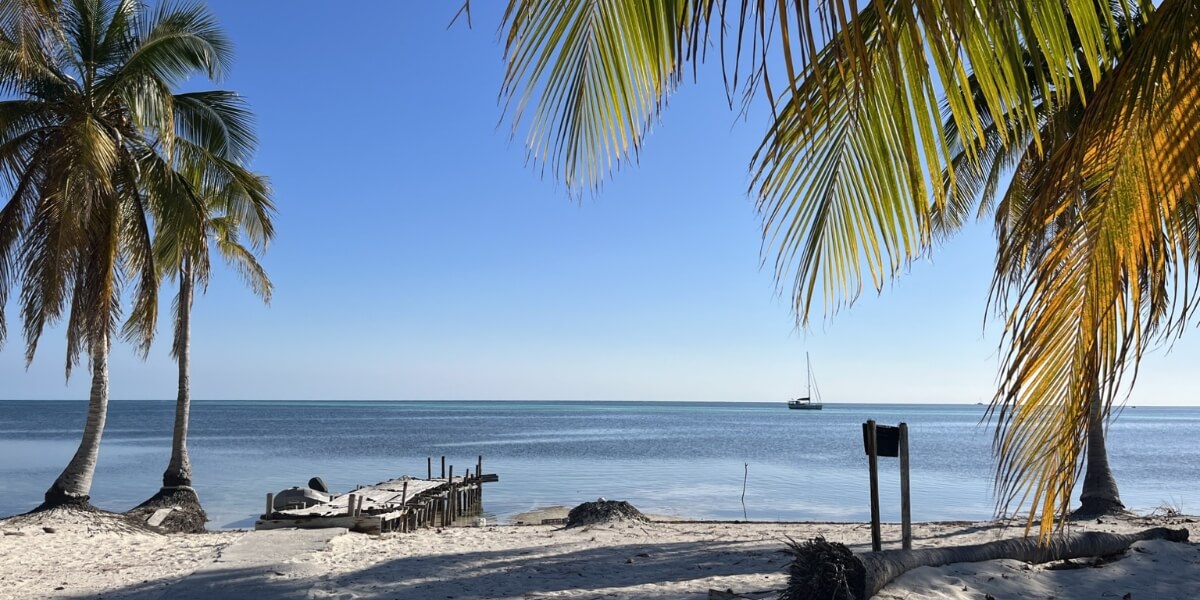
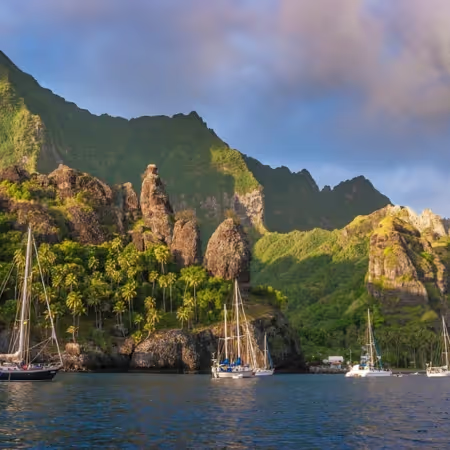
Cuba is a dream destination for sailors in the Caribbean.
If you ask Anne for a short summary of what crews can expect in Cuba, she would put it this way :
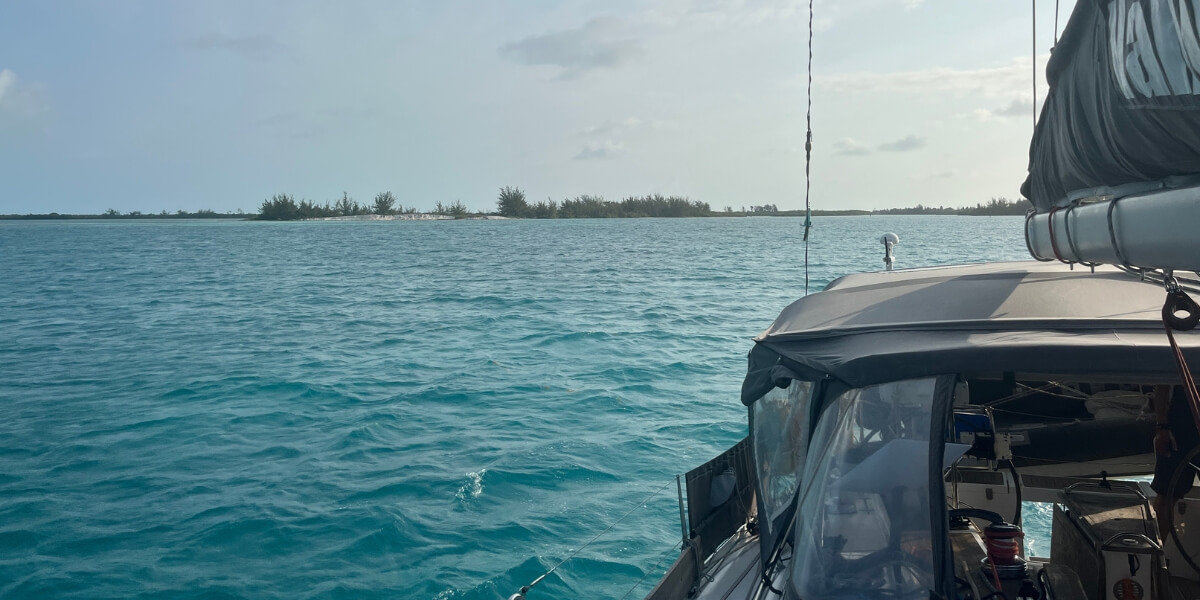
"This island is safe country with a fascinating mix of culture, and remote and secluded sailing areas. There are a lot of isolated "cayos", which are small islands with beautiful coral structures and sandy beaches, and huge lobsters to catch!"
If you ask her, once arriving to the Caribbean, Cuba is a prime destination to have on your travel-itinerary for sure!
He explains that all the major cities they visited, such as Santiago, Trinidad, Cienfuegos and Havana, are wonderful places to explore. These historic colonial cities are filled with palaces, museums and countless attractions. All of this is combined with the unique atmosphere created by Cuba rich history.
Hugues emphasizes on the travel destinations, which of course answers the question of marinas, harbors and anchorages - preferably near interesting sights to visit at the shore and inland of Cuba.
"all the big cities we have been to, like Santiago, Trinidad, Cienfuegos and La Havane, are very pleasant places to visit! Old colonial and historic cities with palaces, museums, and lots to see. And all this is mixed with the very special atmosphere of the rich Cuban history."
Anne explains that nature is everywhere, whether along the coast or inland. “And don’t forget tobacco farming and the world’s most famous cigar production, which can be found in the Pinar del Río region.”
.jpg)
Both are telling us that there is music everywhere, out in the streets, in the bars and restaurants: "Cubans play music, sing, and dance practically all the time. It's not a cliché!"
Dream destinations in Cuba you shouldn't miss
If asked where to go when visiting the largest of the Caribbean islands, both do not have to think about it for too long.
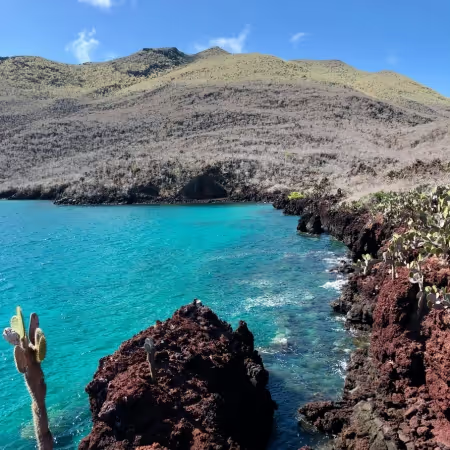
“Even though we didn’t visit the island’s north coast during our trip along the coast, we would say without hesitation that Los Jardines de la Reina was one of the highlights,” explains Anne. The entire south coast is very unique, because even Cubans—and even more so tourists arriving by plane—can’t easily get there.
”Here you will find deserted islands, beautiful, untouched coral reefs and lots of blond sand! We sailed there for ten days and haven’t seen anybody, can you believe?”
she says. Well, except once: A gale had been announced and they had to go to a protected mooring in Cayo Cuervo, where they met three other boats.
Dream destinations in Cuba you shouldn't miss
Another must-go to destination had been the”mogotes” in the Viñales valley and definitely the Pinar del Río region, where tobacco is still cultivated with traditional techniques.
Hugues adds that he loved the colonial architecture and vibes of the town named Trinidad: “There are very beautiful houses turned into museums.” Even if it had been turned into a quite touristic venue, a visit is worthwhile. “We very much liked the atmosphere of Trinidad!”, he says.
And then there is – of course – La Havane, as the two French sailors like to call her: Havana, the capital of Cuba!
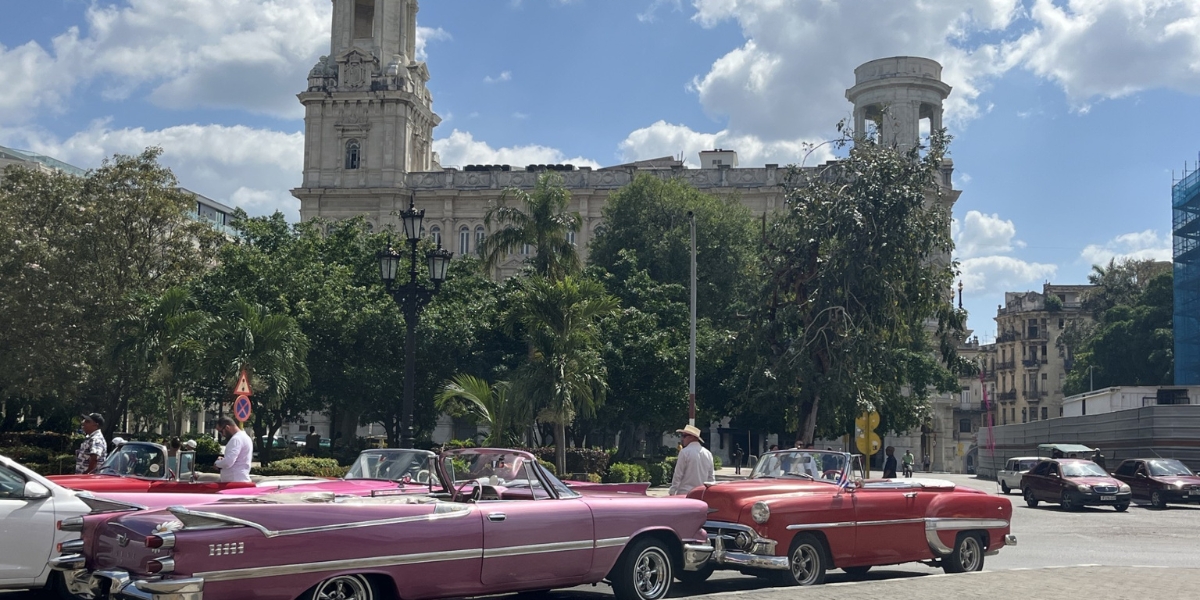
This vibrant city offers a lot, not all can be covered in this article. Its fascinating history fills up books, you can stroll around for hours and get yourself lost within the rich lively activities of the city. Anne tells us about really impressive restauration projects which are going on right now – with equally beautiful buildings literally falling to dust next to them. It´s a city of stark contrasts with the cruel reality of a country suffering from decades of heavy sanctions.
“Nevertheless, the people go on just like that.”
It´s like a time tunnel: Late 50ies American cars are a normal sight in Havana.
“It all comes together just beautifully when the sun has finally set and the city awakes to its lively evenings and nightlife …”
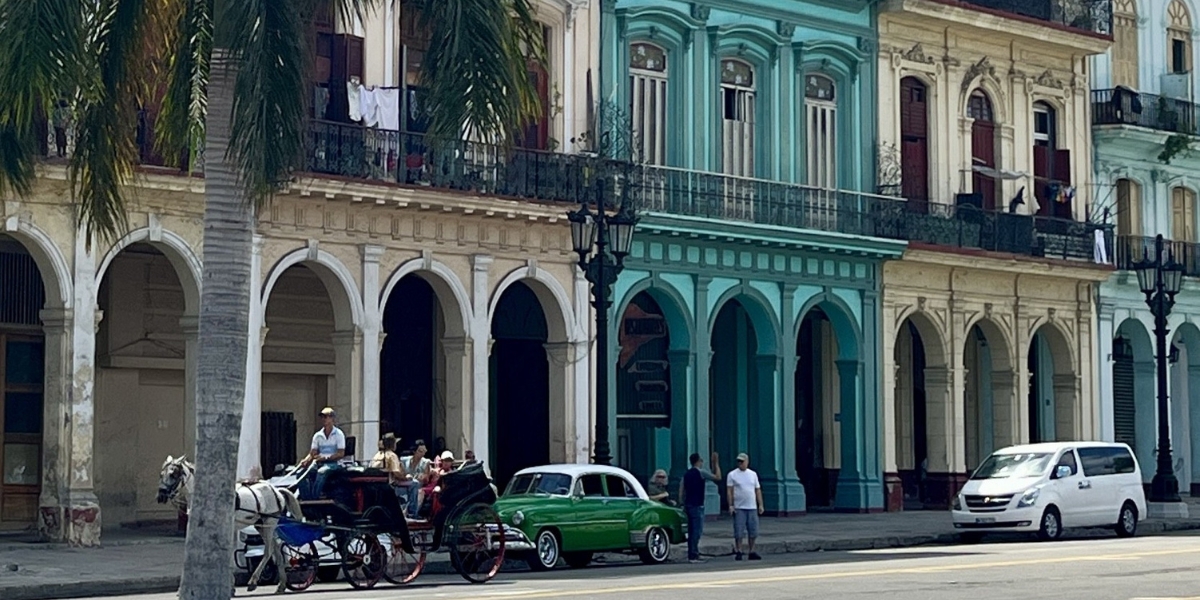
What´s it like sailing in and around Cuba?
Before we talk about visas and travel preparations, let’s stay a little longer in the waters surrounding the island. We ask Hugues what sailing in this region is really like: “Cuban waters are accurately charted, and the charts are reliable, ” he confirms.
“The main channels are marked, buoys and lights are properly maintained in commercial channels, that is in Santiago, Cienfuegos and Havana. It´s only the passages in the coral reefs and very remote areas where you have to be very cautious.”
But that should be usual seamanship in every region, right?
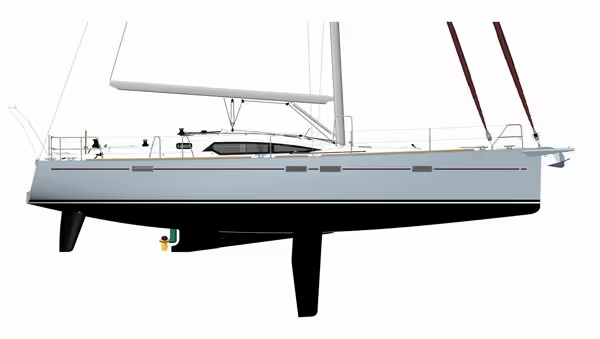
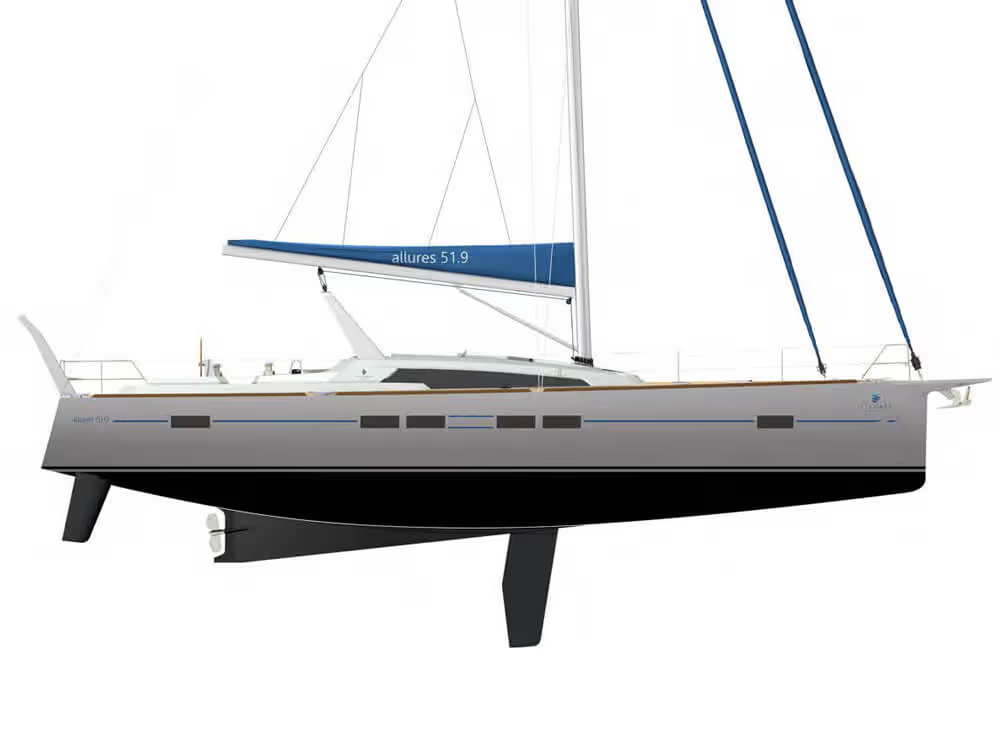
Hugues says that even if Cuba is the largest of the Caribbean islands, the true advantages of an aluminum hull with a retractable centerboard did pay off again on an almost daily basis.
.jpg)
“We were very happy with our boat, enabling us to go where fixed keel yachts couldn´t or also sail a bit more carefree, safety-wise.”
For a skipper planning to sail to Cuba, Hugues strongly recommends getting the latest edition of the Imray guide, even if it is a bit outdated: while the section describing administrative formalities is now out of date, the descriptions of the passages through the coral reefs and the sailing advice remain invaluable. As for the rest?
“Go for it! It´s a dream destination worth visiting!”
Which brings us to our next big chapter: Visa policies and legal formalities. Something we have already covered a bit in Anne and Hugues´ sailing adventures in Africa.
Daily life as sailors in Cuba, a country under US-sanctions
This Island has long been subject to sanctions, which have lately been stepped up even further by the US. There is undeniably a growing concern within the sailing community if choosing this island as a destination might not be a good idea:
What do Anne and Hugues report from their Cuban sailing trip?
Hugues says it is “difficult to give a straight answer on this subject.
“First of all, we went to Cuba in 2024 (we’ve only been there once) with VANUILY, and it was already complicated back then.” But, he adds, “It wasn’t as difficult as it is today!”
.jpg)
It depends on the individual sailing program and what one is looking for to do while in Cuba, he explains:
“Sailing the coast and being independent is not a big problem, if you have the resources and equipment installed on board. If you want to go and explore more of the Cuban inland, doing real “tourism” could be more complicated today indeed.”
But one shouldn´t hesitate: Cubans are really happy to have foreign visitors coming to their island!
This way they can exchange Cuban pesos against US-Dollar or Euro, which is the only way to keep their savings in stable currencies and avoid dramatic pesos devaluation. Or to have access to special shops where they can only purchase goods in hard currency.
“This way, every visitor coming, can really make a difference for whole families.”
.jpg)
Hugue suggests to take special preparations in terms of a sailboat´s technical equipment: “In any case, if going to Cuba, you would want to be completely autonomous on fuel an energy !”
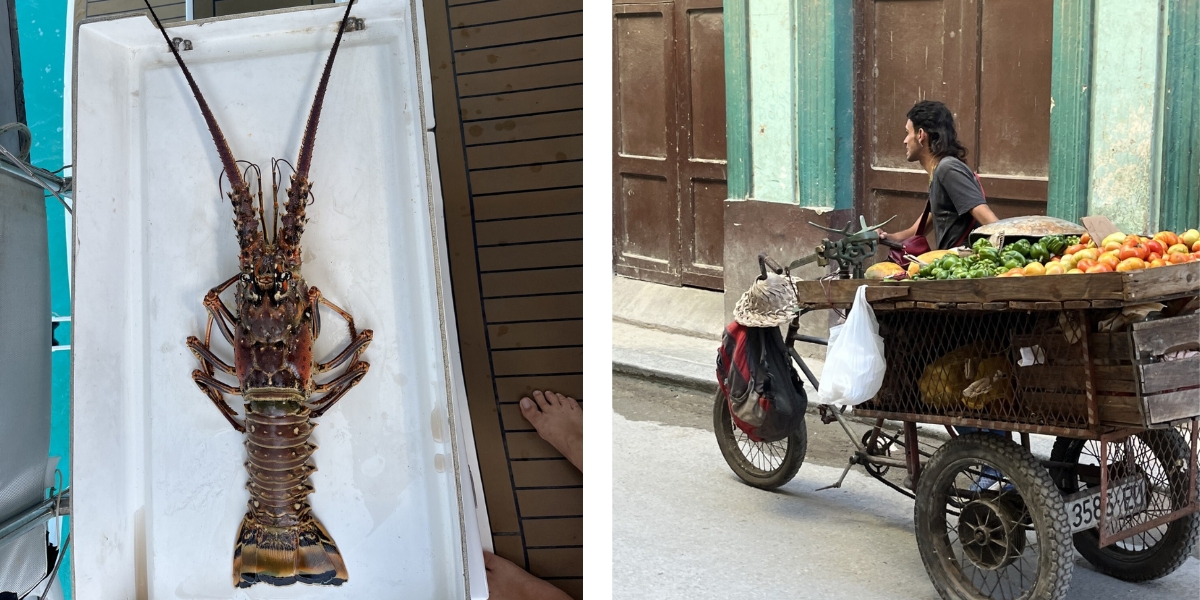
This is a direct impact of the strict sanctions. Anne adds that water can be found in marinas mostly, but since they were at anchor most of the time, they used the water maker installed on board. As for food, she explains that some fresh goods can be found in towns, where there are little markets or small vegetable stands. Fish and especially lobsters are plenty in fishing villages along the coast. But: Not everything will be found!
Hugues tells us, that “for example, we couldn’t find milk, and so we even gave away our powdered milk as Cubans can hardly find milk for them.”
Marinas, anchorages and general mooring in Cuba
Anne and Hugues spent a full month sailing and discovering the south coast of the island. Arriving in Santiago, which is the south-east of the island, the sailed all along the south coast and ended their trip in Havana.
“Cuba has marinas. We don’t know the north coast obviously, but there are marinas in Santiago, Cienfuegos and Havana. Those are the three marinas we went to, but there are a few others.”
As nice as those marinas are, electricity may be a problem. Supply can not be up to standards and sometimes they don’t have fresh water every day.
The couple also took advantage of their stay to explore the inland areas around Havana, leaving their ALLURES moored at the marina for a few days without any problems. But, as one might expect on a true offshore voyage, VANUILY spent most of its time at anchor. About three weeks in total during their stay in Cuba. When it comes to anchoring in Cuba near a marina, however, there is one important point to keep in mind.
"The reality is that you can't anchor wherever you want, especially near cities. Near marinas, you have to anchor in designated areas, and you can only go ashore by going to the marina where the Guardia checked you."
.jpg)
In a few areas, just as with every sailing route, navigation is restricted or even forbidden. For Cuba that is an area south of famous Bay of Pigs. Astonishingly, Anne says, it is said that it is even possible to sail inside Guantanamo bay, but the couple didn´t check that as they went directly to Santiago. In total, they say, they spent almost 60 percent of their time cruising far from all that, in total freedom!
"At the three marinas we visited, we always met friendly people who spoke English or French, which made things much easier," Anne explains. (Elsewhere, it's Spanish.)
How to enter (and leave) Cuba by boat legally correct
Now, let´s talk business – how to plan and pull off your sailing visit to Cuba?
Indeed, Europeans do need a visa. Good news is, you can get one on the spot once arrived in Cuba. Hugues tells us, that legal formalities are all well organized and really easy going. “It took us just an hour for customs and immigration. We had to wait for the sanitary inspection, but everything was ended in half a day.”
The same was true for the departure formalities, which were handled in Havana. There, too, everything was well organized and completed in just two hours. “After a search of the boat with a dog, ” Anne adds.
.jpg)
Both refer to an official paper that is paramount to obtain from the officials and being kept all in good order. It is called the “despacho”. “You have to get it stamped in every place where the Guardia is. It’s easy when you’re in a marina, or anchored close by.”
They explain, however, that things can get more complicated when you’re far from their offices. Nevertheless, they’ve always managed to get a stamp, even when the Guardia had to travel more than a mile by rowboat to reach them!
“Again, any contacts with officials and the Guardia were smooth.”
They point out, however, that they were not always able to get a stamp everywhere, simply because there was no Guardia presence in certain very remote areas.
Other than that, traveling Cuba isn´t very different from other places, legal-wise.
.jpg)
Anne and Hugues usually do their research via Internet well before setting sails and going to their next destinations. “In general, the official websites for each country will indicate the official ports of entry and exit, where customs and immigration offices exist.”, they explain. “Sometimes, where cruising is very common, it is very easy. Lots of the Caribbean countries use the “Sailclear”-system, where you fill in online-forms for clearance. However,
Anne points out, however:
"The French islands use a different website.”
The website is: demarche.numerique.gouv.fr
In general, both note that it is now increasingly common for crews to no longer need to physically go to an office. “Everything is done digitally. However, there are times when online formalities must be completed 24 hours before arrival.”
Is it more difficult for sailors to obtain a Cuban visa because of U.S. sanctions?
First of all, Anne and Hugues point out that on a sailboat arriving from Europe, a visa is not always required. Throughout their entire long-distance ocean voyage, only two countries required a visa: Cuba, as mentioned earlier, and the United States. As for the Cuban visa, obtaining it was extremely simple and was done directly upon arrival. The situation is different, however, for the United States. Since the United States is often the logical next stop for sailors completing the “Atlantic loop,” we wanted to explore this topic a bit further.
.jpg)
Hugues says, that
“for us it was more complex to get the American visa because of timing. To enter the USA with a boat, we needed to have a B1B2 visa, and for this to fill in a form, pay a fee, get the proper passport photo, get an appointment – which has to be scheduled months ahead – to meet an immigration officer in the US embassy of our country.”
The whole process turned out to be quite a hassle, but thanks to some research and good organization, they were able to obtain their visas from the U.S. Embassy in Nassau, which agreed to process visa applications for non-Bahamian nationals. However, Hugues isn’t sure if that’s still possible today.
If you plan to sail to the United States, better plan well ahead and get all the paperwork properly done in advance, to not having to experience bitter surprises. But don´t over-exaggerate the legal implications:
“What we can say is that these formalities were not more complex than in other countries we have been to. In Cuba, they want to meet the crew when you enter the country like in the USA. It´s the same for in Canada or the Dominican Republic and Mexico. Sailing in the USA as a foreign flag, we have to report all our different ports of call, meaning our different moves, as well.”
They did so mostly by phone or now through an app, called the ”CBP Roam app.”
Travel formalities don’t actually differ that much from one country to another; you must always enter a country with the yellow flag flying. The procedure that follows may vary depending on the destination, but it can generally be summarized in three steps:
- If the entry process is entirely digital, you will receive an entry permit, and there is often nothing else you need to do. All you need to do is bring the yellow flag.
- Sometimes, even if the clearance is done digitally, officials ask you to present yourself to custom and immigration offices, or they check your papers at the dinghy dock.
- Sometimes, the sanitary officers check your boat (like in Cuba or Mexico). In Cuba, it’s the doctor who gave Anne and Hugues authorization to remove the yellow flag
Hugues says that they have been boarded four times in total. Meaning, on their whole trip ! First was in Lorient back in France! A second time in Casamance, Senegal. And a third time arriving in Fortune on Newfoundland, in Canada. Last not least, a last time next to St. Pierre et Miquelon.
“Each time we were under sails. They checked our papers and the safety gear of our yacht. We were also controlled in mooring places in Canada and once searched in Cuba before leaving the country. Ah, and don´t forget the sanitary control that happened in Mexico: They searched through our fridge and trash-bins.”
As a sailor, you have to simply comply, Hugues says, but they never had any problems or issues coming up in those different controls.
Corruption was mentioned only once, in Guinea-Bissau, on the African coast. Anne and Hugues have compiled a ranking of the countries with the simplest and most complicated administrative systems: (the ranking has nothing to do with corruption; it concerns the complexity of paperwork)
“Most countries in the Lesser Antilles and Canada are top-notch when it comes to legal and official formalities. It´s mostly carefree traveling. On the other hand, Mexico, the Dominican Republic and said Guinea-Bissau turned out to be our worst experience in that respect so far.”
Keep this in mind when planning your itinerary, and find out about the necessary formalities (which aren't always possible) well in advance to avoid any potential difficulties.
When will you sail to Cuba?
So, what prevents you from setting sails and plot a course to Cuba?
We have boats that can take you there safely and in the utmost comfort.
Our clients have traveled to the farthest, remotest, most beloved and most secret hidden gems of our beautiful planet, just as Anne and Hugues. It´s a thriving community of sailors and owners, happily sharing their rich experience.
As for VANUILY, our beautiful ALLURES that is currently sailing up north along the American east coats, they conclude their Cuba report with this beautiful last sentence:
“We will always keep in mind the kindness of the Cuban people! Their resilience to keep on going when they lack almost everything, and try to do anything to make a living …”
.jpg)
.jpg)
.jpg)
.jpg)
.jpg)
.jpg)

latest news



latest experiences
%20(1)%20(1)%20(1).png)