







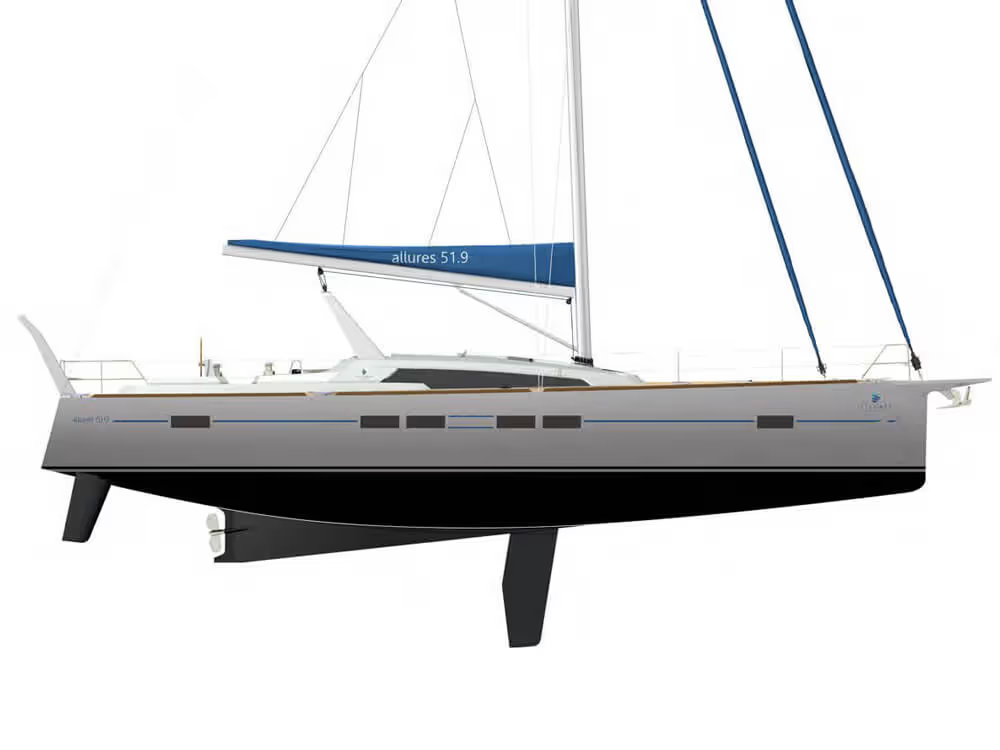









Horizon 47: Sheet metal work and sanding - The aluminium hull shape
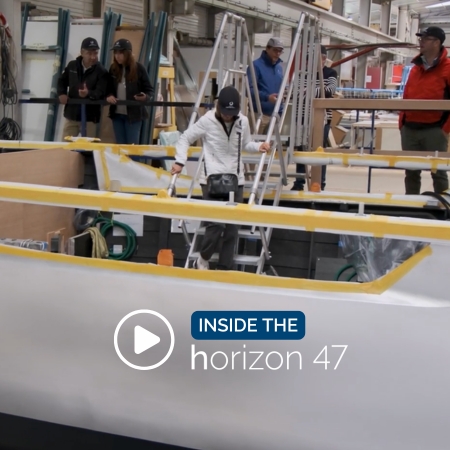
After assembling the sailboat's structure on a table, as described in our previous article, Horizon 47 completed several key stages in its manufacture. At the Condé-en-Normandie site, the hull of the very first model is now taking shape, the result of precision work and passion.
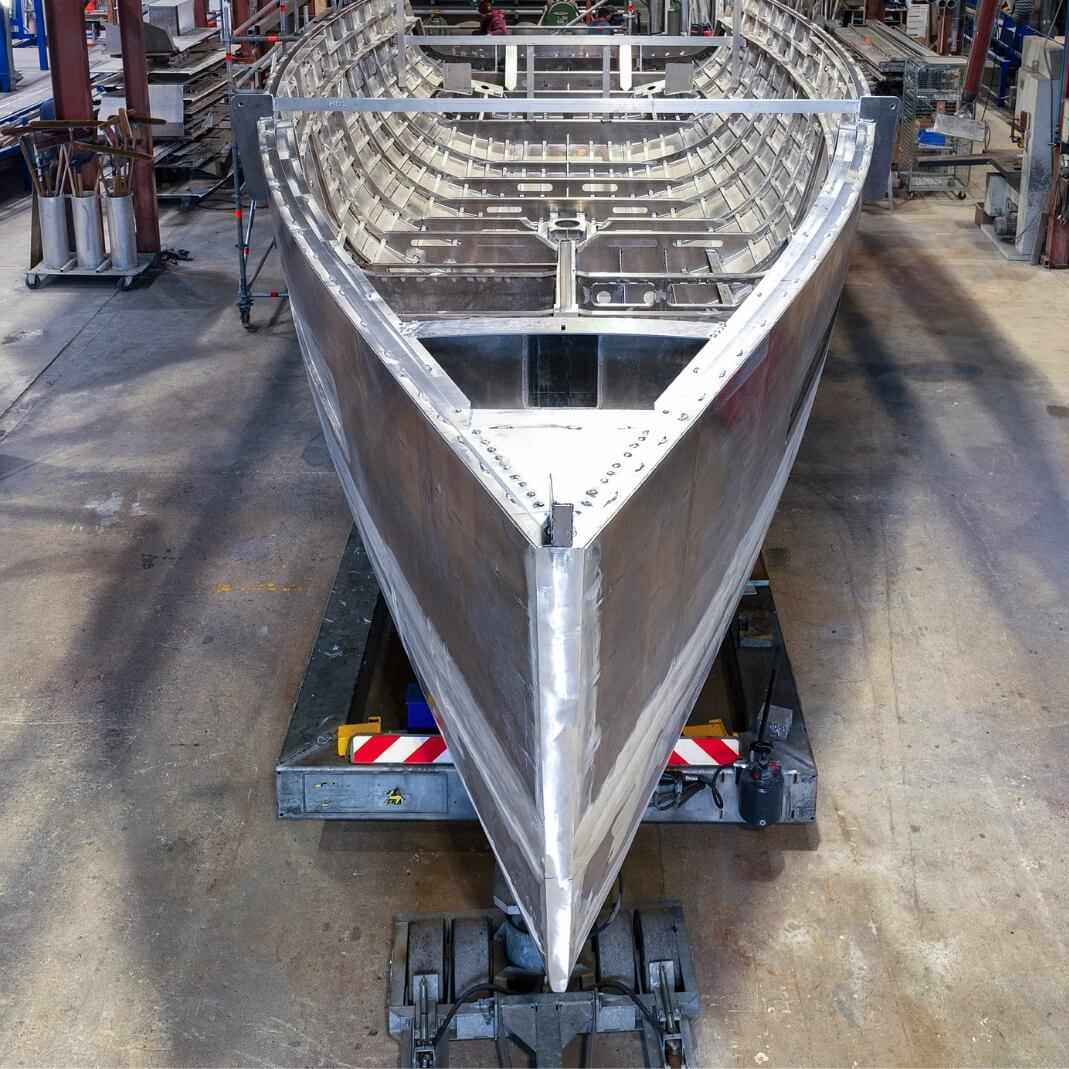
Plating: assembling the aluminium hull casing
Once the bow, frames, and stringers have been assembled to form the impressive structure of the boat, it is time for the plating stage. This involves gradually adjusting, positioning, and welding the preformed aluminum sheets onto the "frame." Each sheet is spot-welded, checked, and then continuously welded, ensuring both the precision of the shapes and the robustness of the whole structure.

This meticulous process brings the sailboat to life. It requires a thorough understanding of the thermal and structural constraints associated with welding to ensure strict adherence to the architect’s hull design. Horizon 47 thus takes shape, panel by panel, revealing the smooth yet powerful lines of its sculpted hull—a hallmarkAllures Yachting.
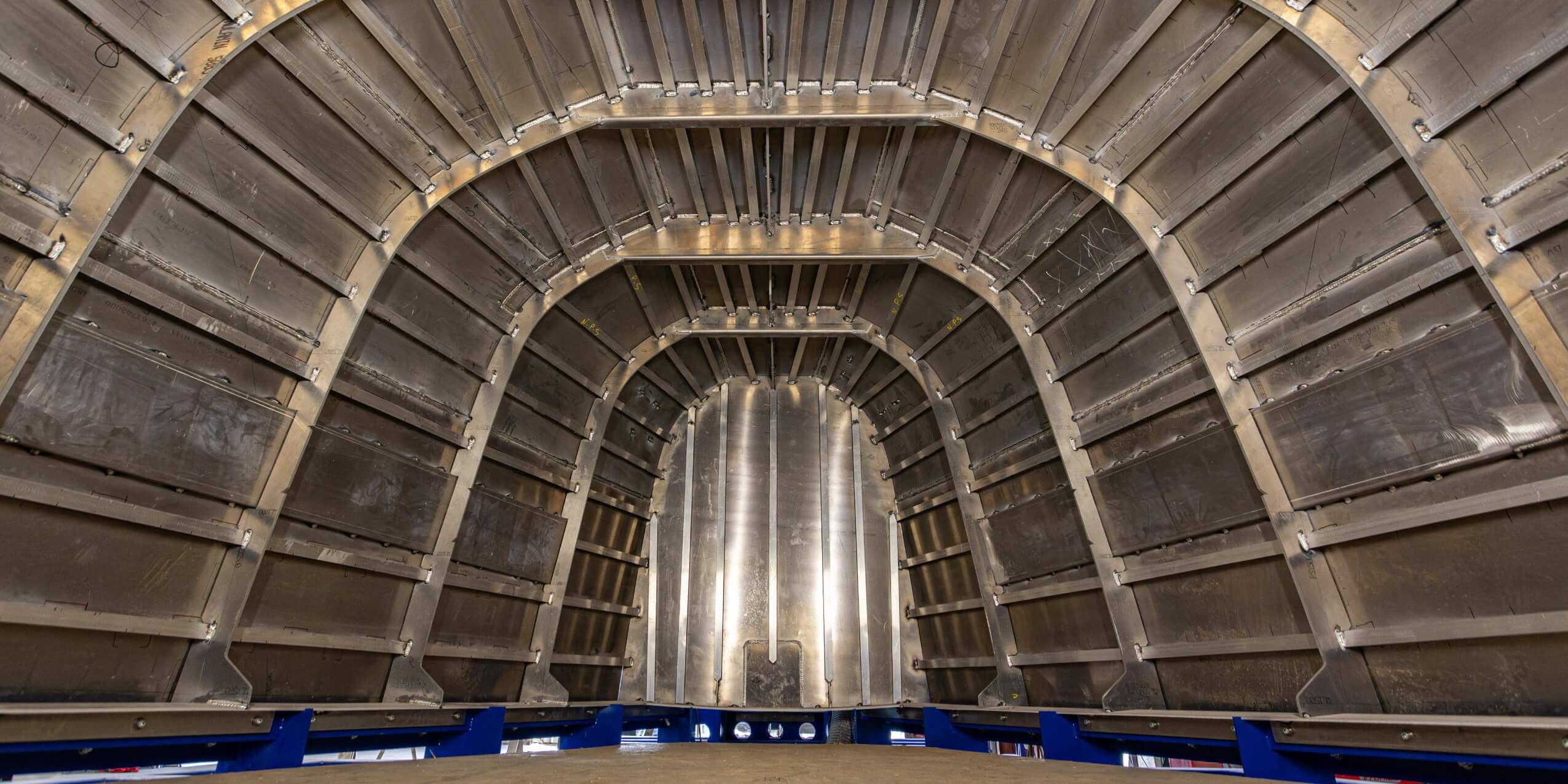
Sanding: revealing the material, enhancing the shape
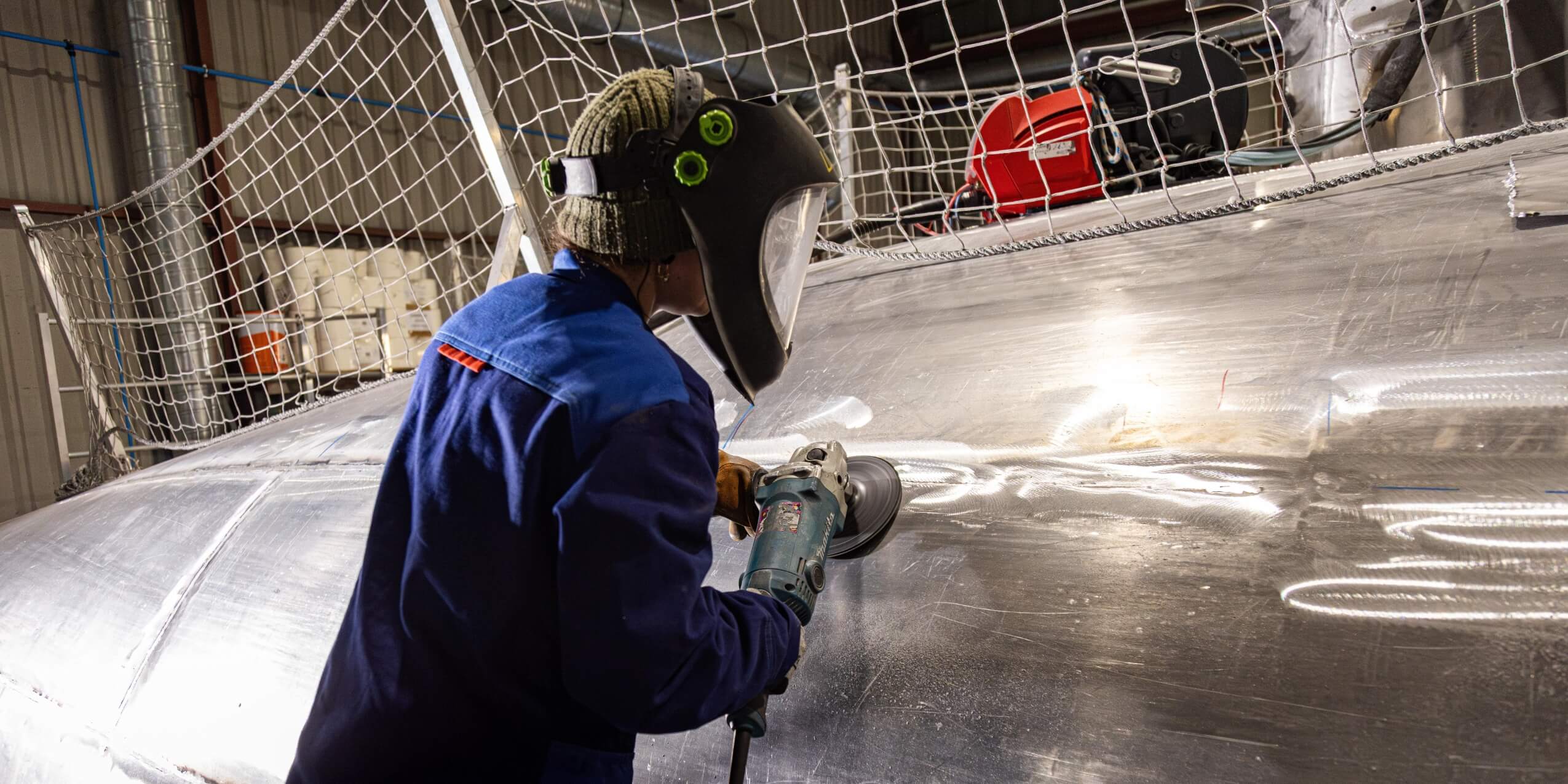
Next comes the sanding of the aluminum, particularly the welded areas, which is both a technical and aesthetic step. It visually unifies the hull and removes any construction marks. Each area is carefully worked on to preserve the purity of the curves and highlight the Allures signature: beautifully shaped hulls that are pleasing to the eye and gentle on the sea.
This demanding and patient craftsmanship reflects all the expertise of the shipyard's boilermakers.
The Turning of the hull
Once sanding is complete, the hull is turned over. This operation, carried out with precision by the shipyard teams, is a key moment in the construction process. Lifted and then tilted using specialized equipment, the hull leaves its initial position to reveal its full volume and allow work to continue.
Beyond its spectacular nature, this turnaround marks a turning point in construction, paving the way for the next stages of manufacturing.

Next step: cutting out the bulwarks. These openings, made with precision, prepare for the next phases of construction. Follow the birth of Horizon 47 step by step subscribing to the newsletter.
Would you like to learn more about the Horizon 47?
→ Request a callback from the Allures Yachting team

latest news


latest experiences

%20(1)%20(1)%20(1).png)