







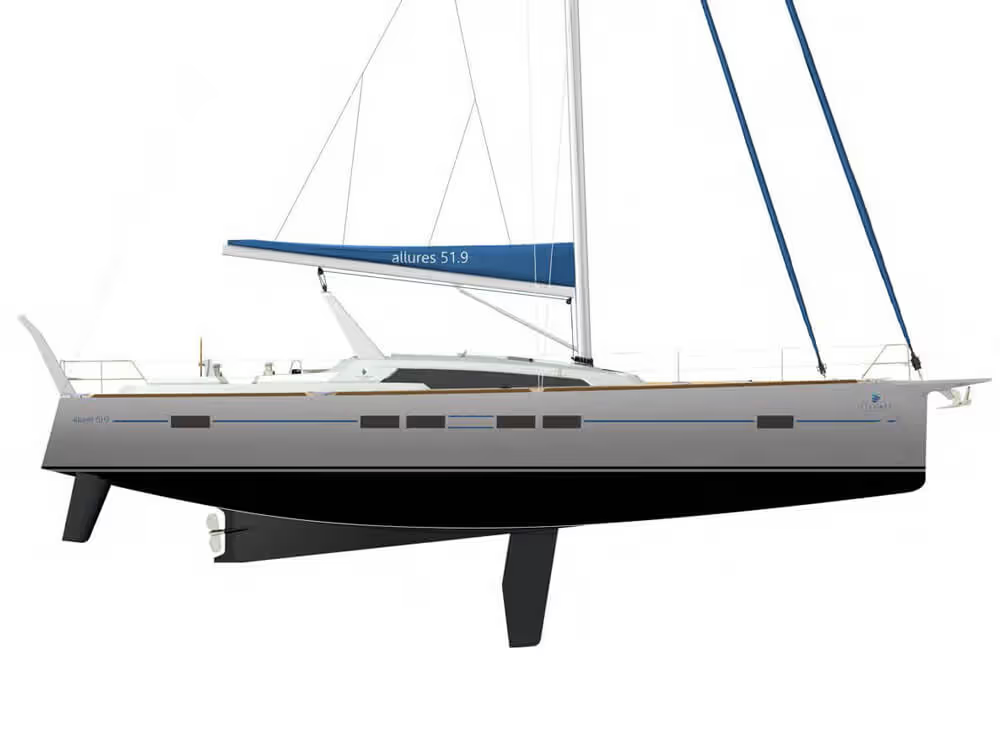









On the Viking Route: from Europe to Greenland aboard the Allures 51.9
The legendary Viking Route: 4,000 nautical miles of adventure, following in the footsteps of the ancient Norse who discovered and settled Greenland, all the way to northern Canada. Marianne and Markus sailed from Cherbourg to Nova Scotia aboard their Allures 51.9. A journey as daring as it is inspiring…

Growlers, Greenland and the New World: CASTELLA sails the Viking Route
Following our Swiss owners Marianne and Markus on their Allures 51.9
The scientific community has widely accepted that it wasn’t Christopher Columbus who discovered the American continent, but a group of Icelandic Vikings about half a century earlier. A man named Leif Eriksson arrived around the year 1000 in the “New World”, following his father’s footsteps who had already begun settling in Greenland. Even though the Vikings’ American settlements didn’t last longer than a few years, the notion of the fearless Norsemen crossing the stormy, ice-laden Northern Ocean in their square-rigged longships still fascinates us. The “Viking Route” has become a must-do for adventurous sailors who are drawn to the Arctic. Such as Marianne and Markus.
The “Viking Route” has become a must-do for adventurous sailors who are drawn to the Arctic. Such as Marianne and Markus.
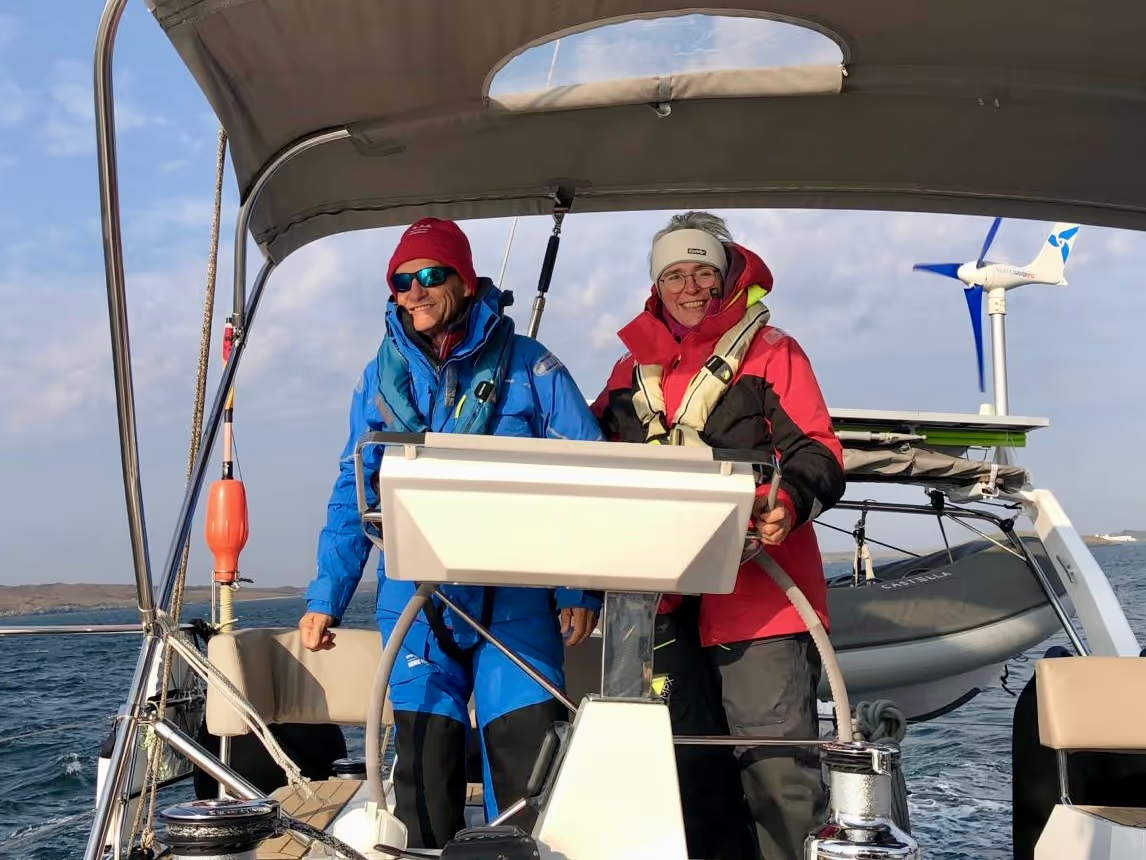
The right boat for a trip to Greenland: Meet CASTELLA, an Allures 51.9
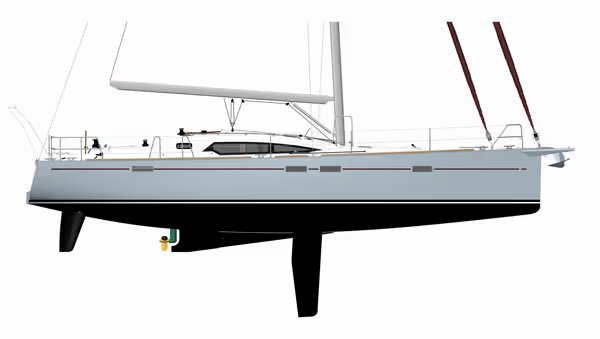
In 2019, this couple of experienced sailors signed on for the first unit of the new flagship of the Allures series:Allures 51.9.
“An aluminum hull, variable draft and of course insulation and heating were basic necessities to sail that far north,” Markus insists. “Our decision for Allures was also driven by their spotless track record in making the benchmark for exploration yachts worldwide.”
Markus should know: he is a graduate marine scientist, sailing for over 40 years on yachts as well as on tall ships. Marianne, his wife, spent her life on and under water, being a keen diver. She started sailing on a J/88 back in Switzerland and has been intensively offshore sailing for more than 10 years. “My home is my CASTELLA,” says Markus and smiles. For him, the ruggedness, stiffness and consistent focus of Allures on real blue water sailing make her perfect for the couple. “She is big enough for hosting guests and friends, but can easily be managed as a couple. She is reliable in very adverse conditions, be it in the far north or in the tropics. A true go-anywhere yacht.”
For CASTELLA and her crew, taking on the Viking Route was set to be the first major offshore adventure, starting right here in Cherbourg at the shipyard where the boat had been built.
“She is big enough for hosting guests and friends, but can easily be managed as a couple. She is reliable in very adverse conditions, be it in the far north or in the tropics. A true go-anywhere yacht.”
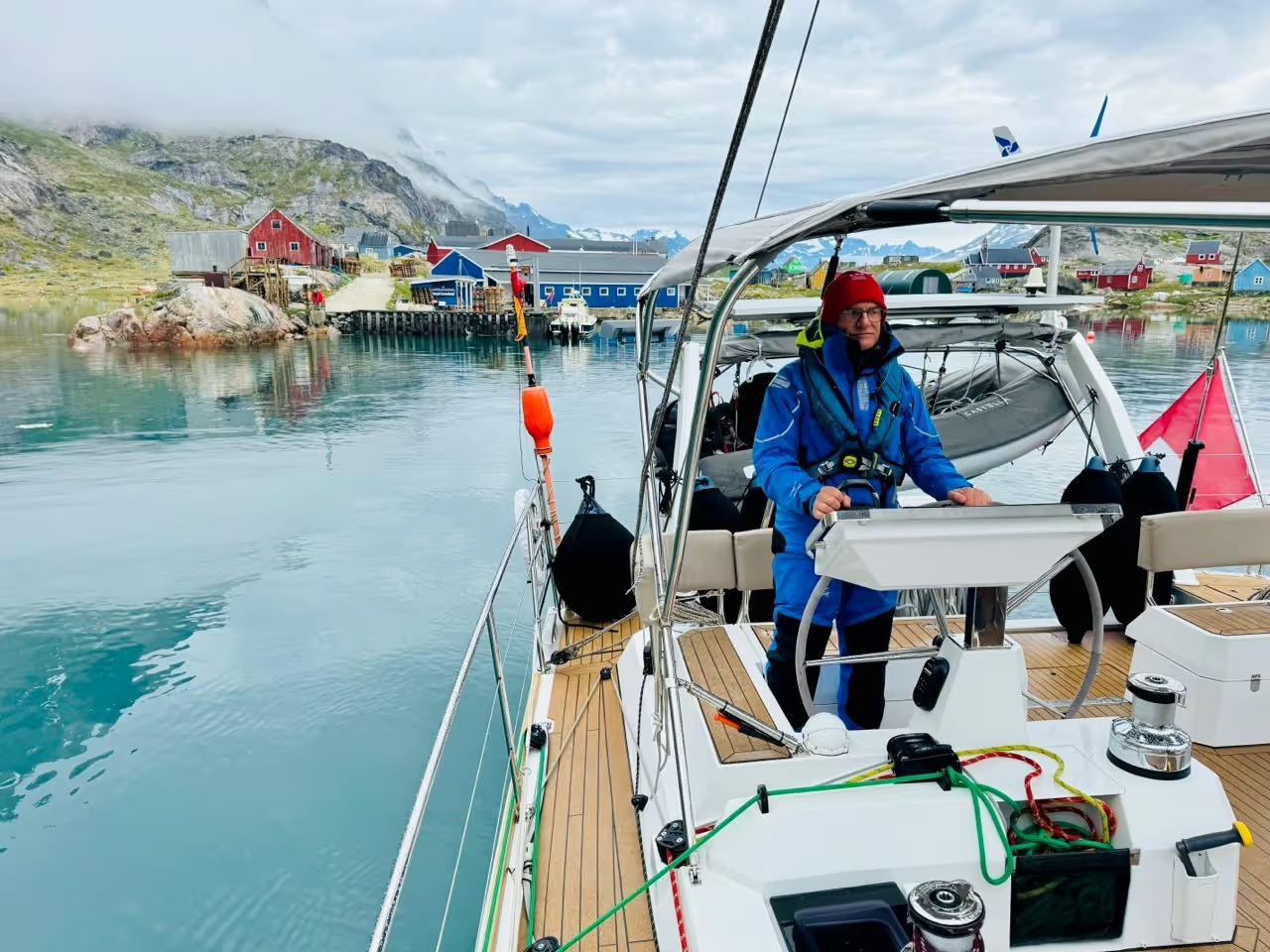
First leg to Iceland: Of calms and glowing lava streams
After her first two years in French and British waters, CASTELLA set sail from Cherbourg at the end of March 2024 for the Viking Route. There was still a good chance of encountering strong winter storms coming in from the west, but for the first leg to Ireland, conditions remained manageable. At times, the engine had to take over. Fortunately, because it failed mid-way due to a defective oil pressure sensor.
After being adrift for some hours, the boat was towed by the RNLI into the small harbour of Arklow, south of Dublin. After a quick repair, CASTELLA set sail again along the eastern Irish coast and up to the western Scottish islands such as Islay, visiting Oban and Ullapool. From Stornoway, the crew headed into the open sea, bound for the Faroe Islands.
.avif)
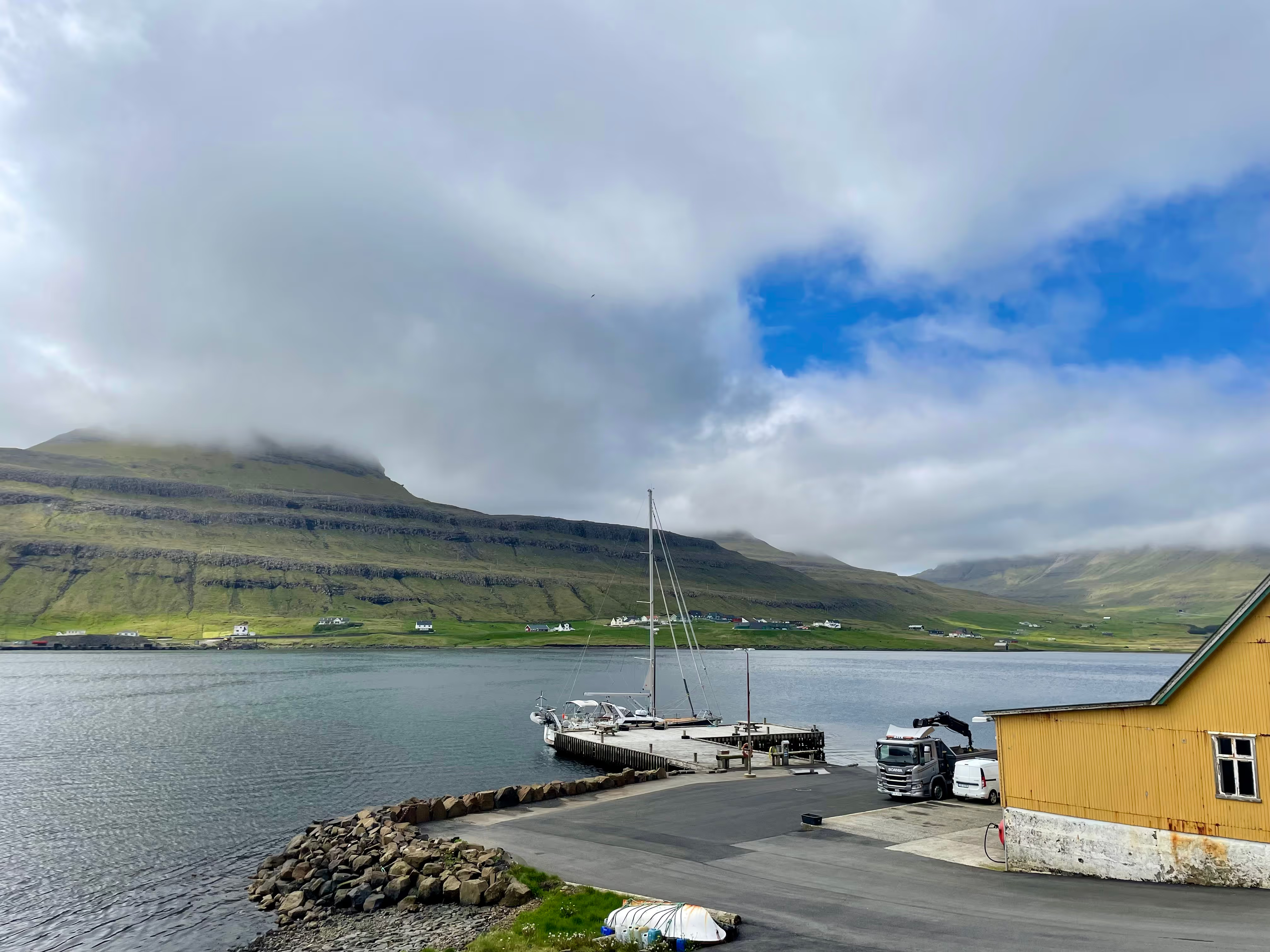
May it be the meteorological magic of the couple’s route planning or (again) due to the mercy of Poseidon, CASTELLA meet a nice calm seas and following winds — although they would have appreciated 5 or so extra knots of wind. This gentle sailing would have been much more pleasant without the frosty nights and foggy days, a sign of the harsher weather awaiting them farther north. As much as they would have loved to spend more time discovering the beauty of the Faroe Islands, they stopped only twice, because reaching Greenland was their true goal. After waiting for a suitable weather window, CASTELLA set sail for the approximately 450 nautical miles to the southern tip of Iceland.
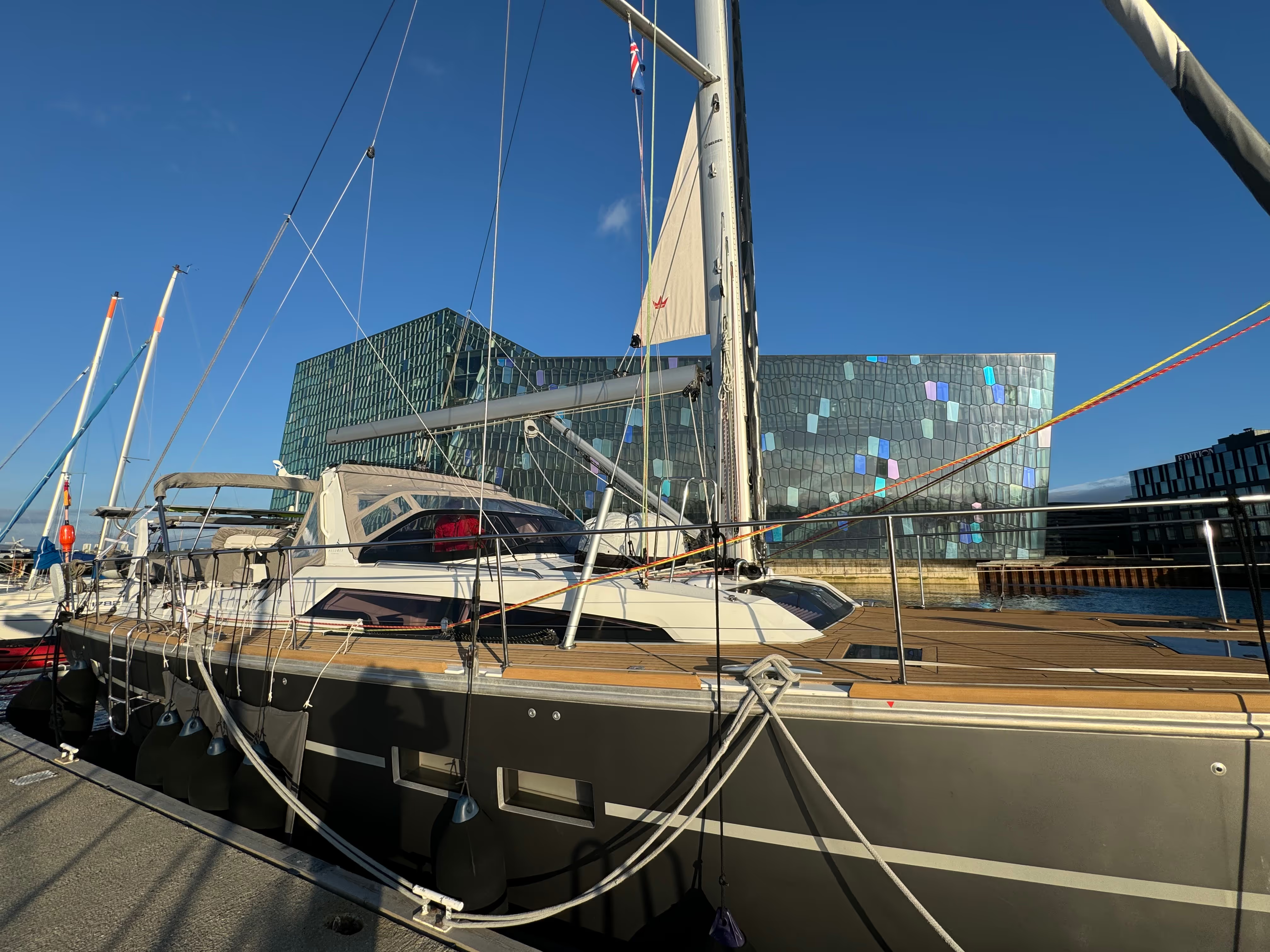
Arriving on Vestmannaeyjar, or Westman Islands, the crew sailed on to the capital Reykjavik, passing the impressive volcanic chasm of Grindavik: The glow of molten lava was visible from the boat, which was a both fascinating and awe inspiring occasion. CASTELLA remained in the harbour of Reykjavik for a few weeks as the crew had to wait for the ice belt to shrink, which was at that time still blocking the passage to Greenland.
.avif)
In fact, Marianne says that sailing in the Northern hemisphere is – much more than ordinary sailors are used to it – prone to an ever changing weather. Weather windows, both in terms of winds and waves, but also in terms of the ice situation, have to be thoroughly calculated. And often waited for. That said, the second leg to Greenland had to be skipped by weeks until, at last, the ice finally loosened its strength and gave way.
In fact, Marianne says that sailing in the Northern hemisphere is – much more than ordinary sailors are used to it – prone to an ever changing weather.
Closely monitoring the weather: Icebergs ahead!
Sailing into the ice, is always a risk. Markus emphasizes that not only the present day weather and ice charts are interesting, but also the history of past winters. There are years with a very thick and wide ice belt along the coast, and years with less ice.
As for 2024, the year of CASTELLA´s journey, Marianne and Markus had to face a strong ice year: “By the end of May, the ice belt was still as wide as 60 kilometers off the coast of Tasiilaq, twice as wide as the year before!”, Markus remembers. “But luckily, by the end of June the ice charts showed a free passage to the southeast of Greenland. By the way, we had do set sails because our insurer had imposed a maximum ice-cover thickness in which only we were free to go. So we set sail.” It was July the 15th when they finally left Iceland.
"It's important not only to consult current weather and ice charts, but also to analyze the history of previous winters. Some years the pack ice stretches far along the coast, others are milder."
CASTELLA made good progress in moderate winds, but during the five days of the passage, the engine had to run for 26 hours. With daily temperatures around 8 degrees Celsius and water around 12, it was especially interesting to suddenly watch them drop significantly as the boat entered the waters of the Greenland current. From 12 to just above 4 degrees, this mighty stream brings ice-cold waters and a lot of ice from the Arctic. Exciting, especially for the marine scientist.
.avif)
Apart from nature, one of the most important daily routines (besides cooking) was checking the weather and adjusting tactical decisions as well as the big picture to the ever changing situation with drift ice and icebergs. CASTELLA is equipped with Starlink, which, as Markus confirms, worked spotlessly even in these high latitudes. The crew kept a close eye on the danger zones as well as the wind prediction. Keep it safe!
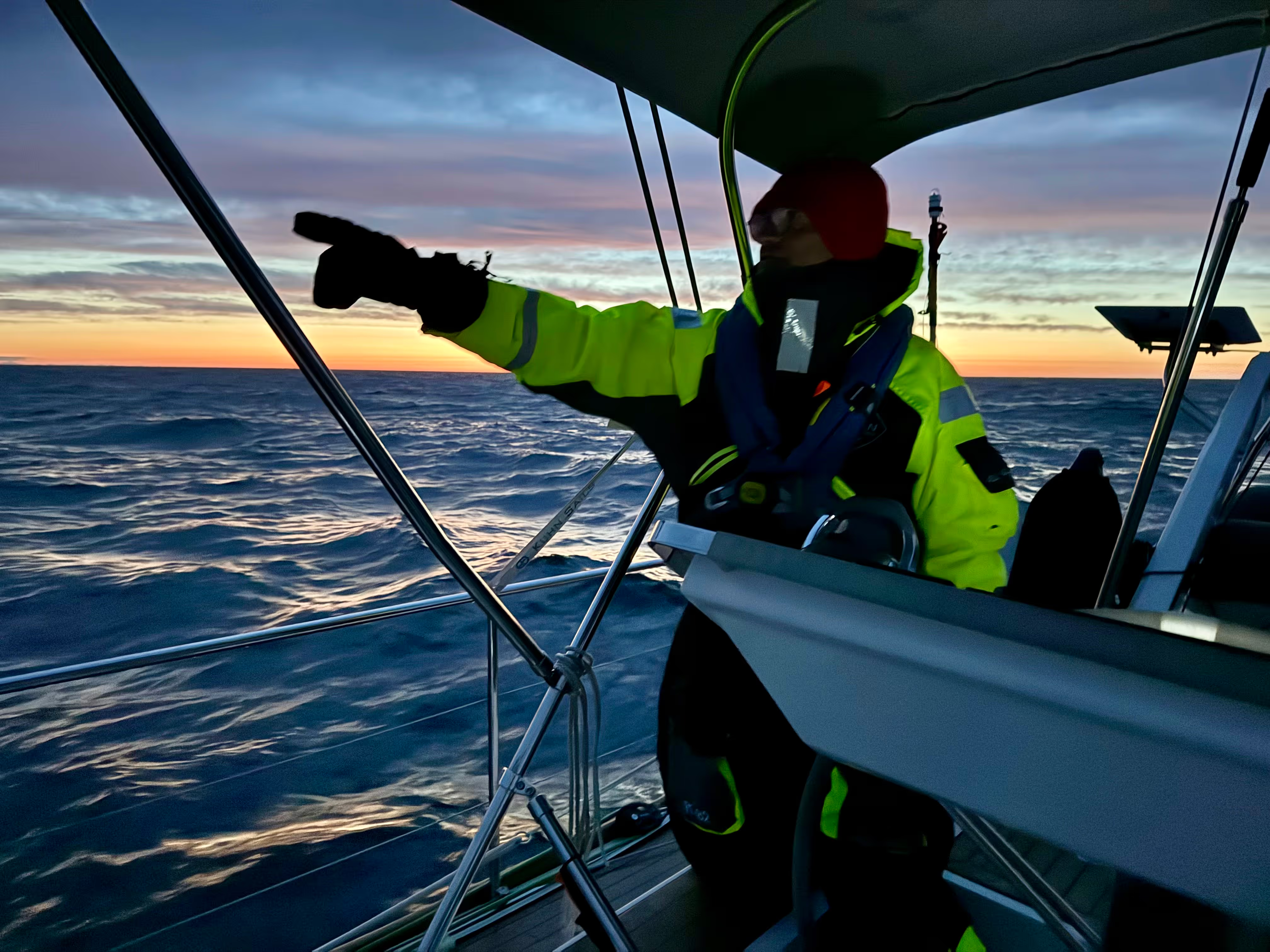
Other exciting things happened, which offered a rich palette of offshore-experience for the crew: A diesel filter failing, resulting in a huge spill in the engine compartment being on the more enervating side of the spectrum; some crazy changes in temperature from 4 degrees to almost sunny and “Mediterranean” conditions making the crew their head scratch and celebrating a breath of summer on deck. But then, after five days, the first mighty icebergs with Greenland´s coastline came into sight. A perfect sailor´s morning after some 650 nautical miles.
"(...) after five days, the first mighty icebergs with Greenland´s coastline came into sight. A perfect sailor´s morning after some 650 nautical miles."

"Ice can drift at 2 knots!"
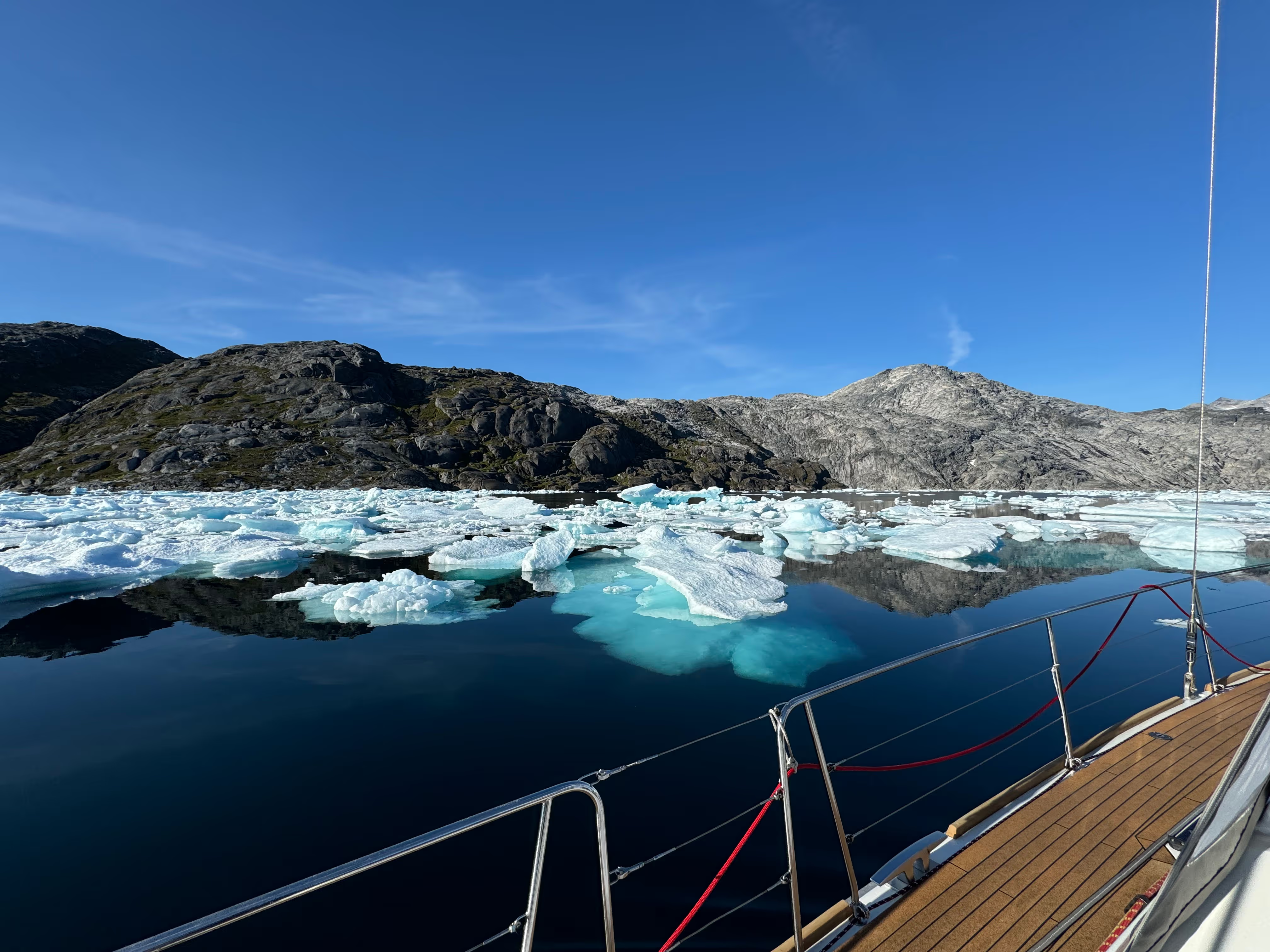
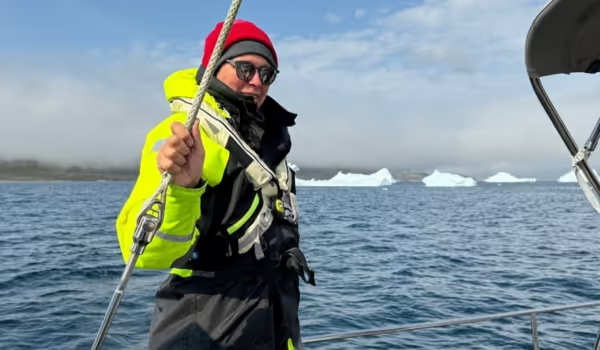
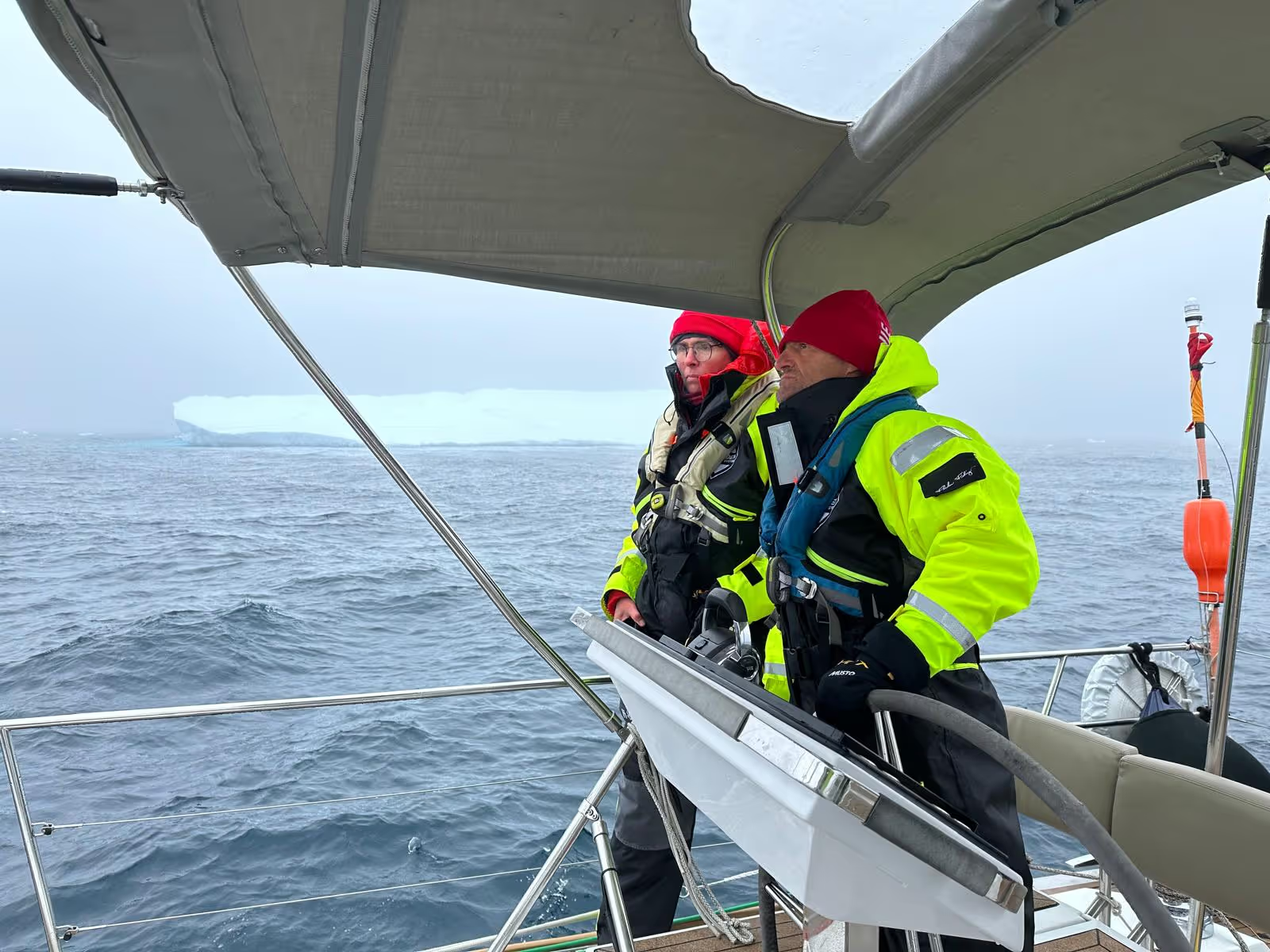
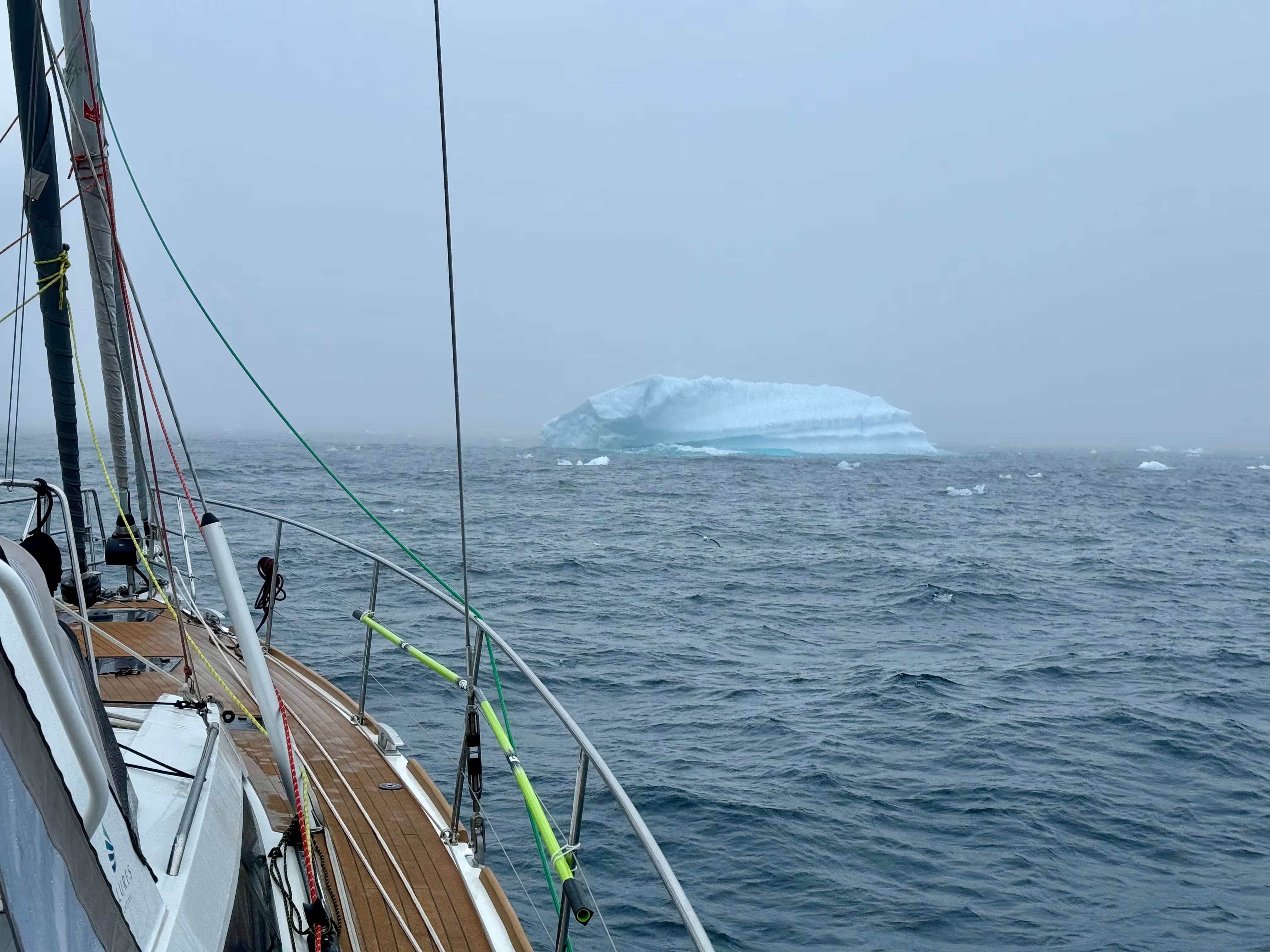
About ten nautical miles from the entrance to Prince Christian Sound, the CASTELLA reaches the edge of the pack ice. A thick fog settles in, and the sound of cracking ice can be heard—the atmosphere becomes almost eerie. The ice edge is a constantly shifting expanse. Growlers—those iceberg fragments barely visible on the surface, though much smaller than the true ice giants—are feared because they can damage boats and ships. “How lucky,” says Marianne, “to be aboard an Allures: the solid, reassuring aluminum hull provides a genuine sense of safety, both real and felt.”
Marianne confides, "How lucky I am to be aboard an Allures: the solid, reassuring aluminum hull provides a real sense of security, both real and felt."
The challenge: Ice isn’t sitting still, like in a computer game. It is moved by current and wind. “We’ve had to put a constant, very thorough lookout up on deck as I really did not want to test the actual material strength of our hull …” Carefully and meticulously CASTELLA moved under engine through the white sprinkled sea. Although they had up to 15 kn of AWS, sailing would have been too dangerous.
“When we reached our anchorage, my heartrate could finally drop. It was such a relief!” Which did not hold for too long, as early the next morning the screeching and scratching of an ever thickening ice layer woke up the worn-down crew. “Anchor up! Let’s leave!” Normal procedure in Greenland.
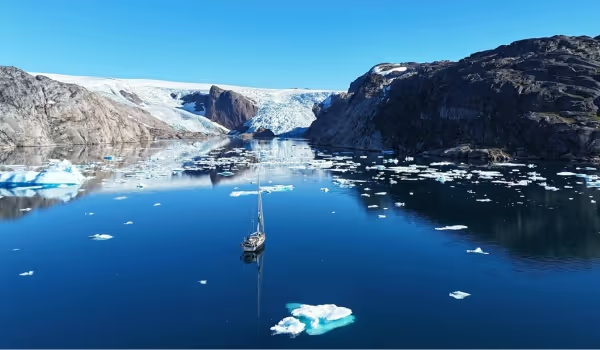
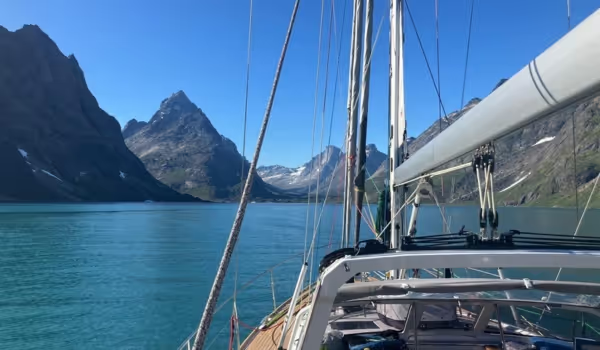
This exciting start on that day was followed by an unforgettable ride through the Prince Christian Sound in fantastic weather.
From Greenland to Nova Scotia: "New World in Sight!
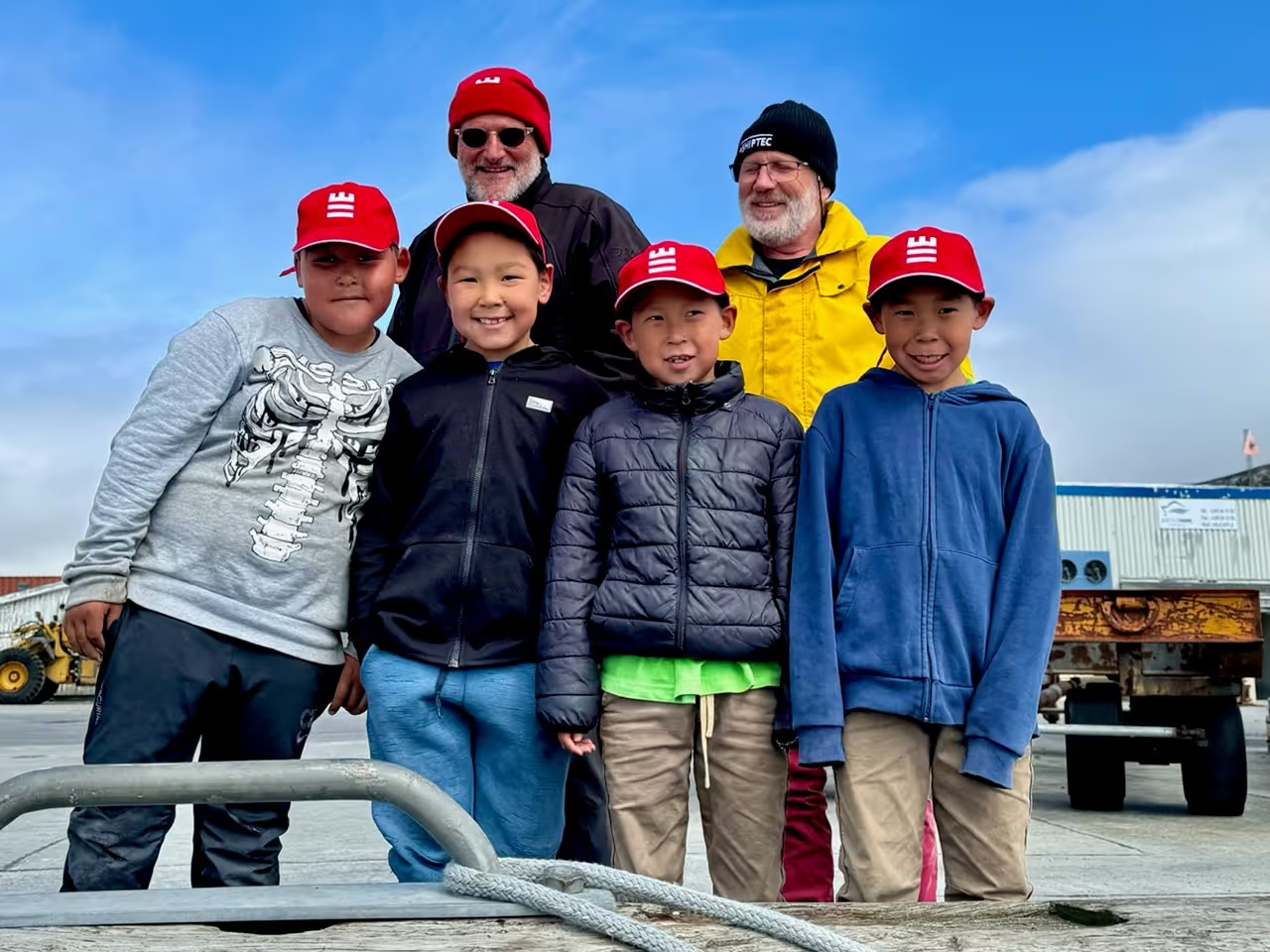
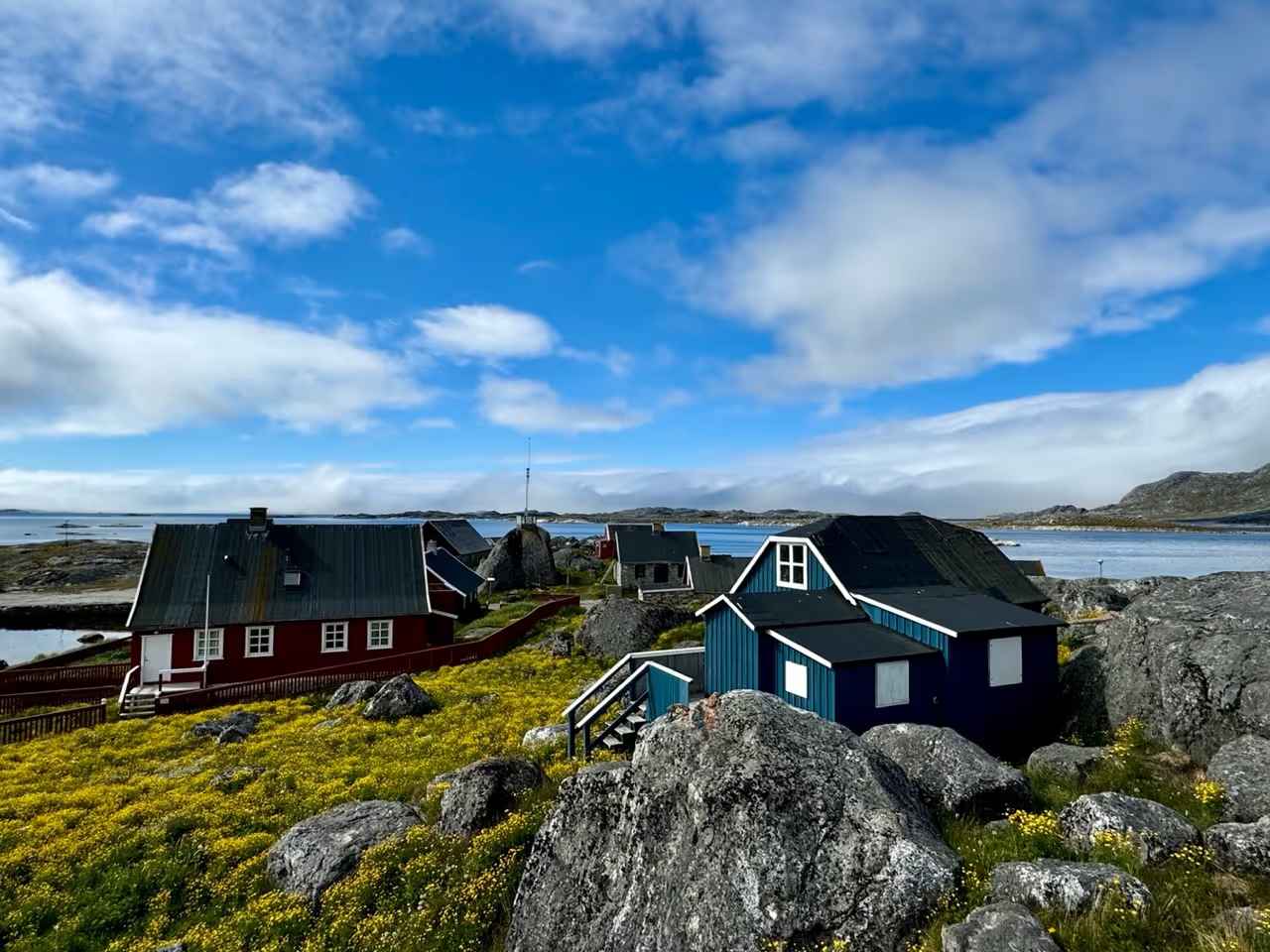
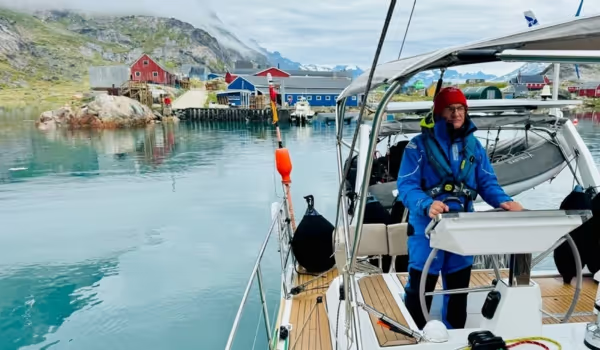
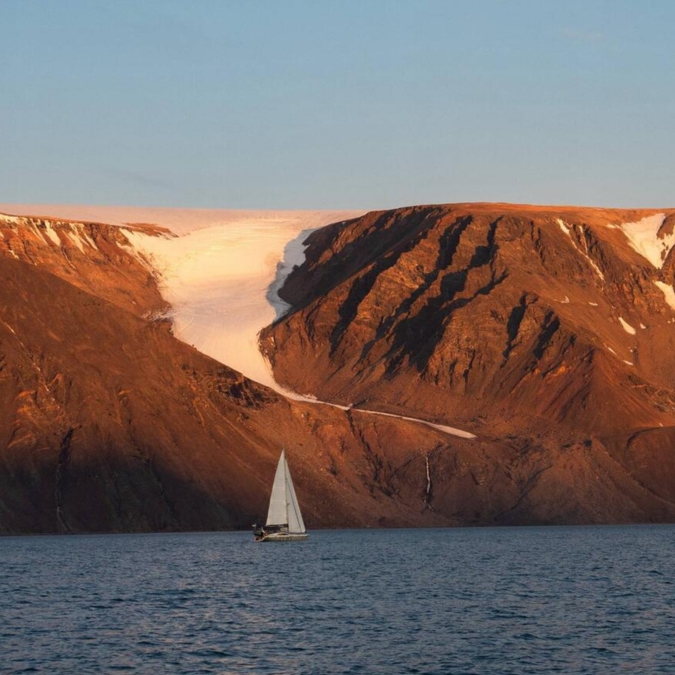
CASTELLA stayed in Greenland for 3 weeks. Hopping from inlet to inlet, dropping anchor in barren, empty bays or berthing in the few settlements. When ferrying out by dinghy to the shore, the shotgun became their life insurance: Wild polar bears are a constant risk in Greenland. Happily, they had never to deal with an aggressive encounter. Nature was as jaw dropping and inspiring, as was meeting with the people. Their welcoming culture, friendliness and curiosity created many happy memories. “Sailing along Greenland and the adventures would fill a whole book”, Marianne says: It´s as wonderful as you think of it to be, but also so different from what you have in your mind.
.avif)
“Sailing along Greenland and the adventures would fill a whole book”, Marianne says: "It´s as wonderful as you think of it to be, but also so different from what you have in your mind."
Making her way up North along the southwest coast of Greenland, CASTELLA met only very few other yachts, but made friends with many sailors. The little settlement of Narsarsuaq with not more than 130 inhabitants was the last stop: Here, international flights use to land and another crew change could be organized for the last leg: Finally, they would reach the ”new world”!
Starting the third and longest leg to Halifax on Nova Scotia, this would be the longest leg of them all. That is why they replenished their provisions as much as they could and finally set sail in Qaqortoq, the largest settlement in South Greenland, with only 3500 habitants. It is Greenland´s center for seal-produce (all of which is strictly forbidden in any case in Europe).
"...in the Labrador Sea, the crew must continue to consult the ice charts and remain on the alert for icebergs which, even in summer, drift southwards..."
CASTELLA made good progress in nice winds, averaging 6 knots SOG. Leaving the coastline of Greenland which during summer is for the most part free of ice. Leaving the fog and leftover drifting ice behind, very slowly air temperature began to rise again. Nevertheless, the crew still had to study the ice charts in the Labrador Sea and keep watch for icebergs, which also drift southwards in summer with the Labrador Current.
After five days of great sailing, the last of which was a quick close hauled upwind passage, CASTELLA´s crew saw the first signs of land: America! “It´s strange to say, but we could really smell the forest from so far ahead!”, says Markus. On a very clear day they landed in Lewisporte, Newfoundland. They stayed a few days and finally reached Halifax on August, the 17th. The crew had to spend a few days, weathering a passing Hurricane which did no harm at all, before finally arriving at the Royal Nova Scotia Yacht Squadron, America’s oldest Yacht Club – the end of an almost 4.000 miles long journey.
"It's strange to say, but you could really smell the forest from so far ahead," says Markus.
A brave ship, indeed!
What for other ships may be the “baptism in fire”, was more a “baptism in ice” for CASTELLA. Tackling such a long and challenging route is quite an undertaking. Apart from the – admittedly enervating but overall harmless – setbacks due to failing little parts, the boat more than lived up to its reputation. “She indeed is a very stable and rugged platform, instilling a feeling of real safety even into guests who have not much offshore experience”, Markus says. Marianne adds that CASTELLA has proven her storm-rigidity on many occasions since the handover in 2022.
“She indeed is a very stable and rugged platform, instilling a feeling of real safety even into guests who have not much offshore experience”, Markus says.
Being skilled sailors before and having collected hundreds and hundreds of nautical miles with CASTELLA, our customer couple confirms that the Viking Route was indeed the most challenging and exciting trip so far. After completing the Viking Route, they are once again 100% reassured about their capabilities and those of their fine, brave yacht, continuing their offshore journey with bold confidence.
To find out more about theAllures 51.9 : click here




latest news



latest experiences

%20(1)%20(1)%20(1).png)