


Sailing in Western Africa: Is it safe and worthwhile? Anne and Hugues in their Allures 45 - Senegal, Gambia, Bijagos
Roaming the seven seas in complete freedom is the dream of many sailors. Usually, the routes cover the classic "Coconut Route" around the world or the Atlantic Loop. Africa, for most part, is a rarely visited location, which is due to the questionable security situation for many countries and also a lack of sailing infrastructure. At least that's the common preconception when it comes to sailing in Africa, some of it man be true, some other maybe bias. We've talked to ALLURES-owners Anne and Hugues, who have embarked on a world voyage and tell a very different story. But first, let's find the right boat...
%20(1)%20(1)%20(1).png)
Sailing and living aboard an ALLURES
Anne and Hugues were regulary sailing one or two weeks a year and dreamt of spending more time on a yacht This materialized back in 2020 when Hugues left the company aged 64, Anne, a bit younger, took an 18 months leave: The plan was to loop the Atlantic Ocean and then discover the Mediterranean. At that time the couple did not own a boat yet, but they've already had a pretty clear understanding what kind of yacht it should be
"Aluminium hull for sure, with a retractable centerboard and size between 40 to 45 feet."says Hugues. "We found a suitable yacht a few months later when I finaly resigned from work, bought her and instantly moved onto the boat"
It was, of course, a used ALLURES 45, but in perfect condition. As Anne puts it, it had always been her husband’s first choice—the boat of his dreams. When they cast off in May 2021 from Lézardrieux, in northern Brittany, the couple embarked on a journey that now totals 28,000 nautical miles: sailing along the magnificent French coastline during the summer to get comfortable on board, gain sailing experience, and get to know the boat inside and out. They prepared the boat with several modifications for the long voyage, completely organizing their life on board. “We are currently heading north and will reach Key West, in the United States, in a few days, ” explains Anne. When you look at their itinerary, it’s truly the kind of trip many people dream of today…
%20(1).png)
They set sail from Portugal, sailed via Porto Santo to Madeira, and then on to the Canary Islands. Up to that point, it was a fairly “standard” route, but then they veered off the beaten path. Their journey to West Africa followed, a segment we’ll examine in more detail a bit later. After those exciting weeks, they returned to Las Palmas in the Canary Islands for maintenance, spent three months in Cape Verde, and then crossed the Atlantic to the Lesser Antilles. But instead of sailing through the Caribbean, VANUILY headed south to French Guiana, where Hugues had previously worked. “It’s clearly not a paradise for sailors, since French Guiana lacks nautical infrastructure, but for me it was something very important on a personal level…, ” he explains. Back in the Caribbean, some maintenance was carried out in Trinidad, followed by stops in Cuba and the Bahamas, and a long journey north along the east coast of the United States and Canada, with a winter stay in Quebec on the St. Lawrence River: ALLURES territory!
%20(1).png)
With the yacht freshly prepared for another summer sailing season, Anne and Hugues went down into the Caribbean again because there were so many destinations left for them to explore. Having spent the winter there, they are now on their way back up north. It´s amazing because Annes says that it was never really their “lifetime plan” to be such ardent sailors, although both liked being aboard boats. “Hugues has been boating since he was a teenager, becoming an experienced skipper later sailing in many different areas of the world”, Anne explains: “I was always eager to go sailing, but it was more the frequent holiday-style with friends or family. As both our professions didn´t even allow for dreaming of long voyages with a boat, it never really was a serious thought for us.” But then retirement came and with it the opportunity to start it: “Why not?”, says Anne – the rest is history.
“For us it is not where the wind blows us … it´s a lot of preparation, really.”
The list of countries VANUILY has already visited reads like a veritable hall of fame—or rather, an ideal itinerary for a grand offshore voyage. Since the couple naturally follows the seasons, trade wind patterns, and classic sailing routes established over centuries, this is far from a spontaneous journey. “It might seem that way, but we certainly don’t just sail wherever the wind takes us, even though we like to seize opportunities or follow recommendations from friends or other sailors we meet along the way, ” explains Hugues. They generally start planning their next destinations up to six months in advance. Why? “Some destinations simply require more organization, administrative procedures, visas, and permits, ” he explains. “This applies to exotic places like French Guiana, but even countries that seem fairly ‘ordinary,’ like the United States, require much more time to organize.” This is mainly due to visa restrictions and the necessary authorizations.
%20(1)%20(1).png)
“ Even though it’s really enjoyable and exciting, it does involve a lot of work, ” says Anne. “But you can’t go everywhere! And you know what? If we miss one of our ‘must-see’ destinations, it really isn’t a problem for us. We’re so happy, and we’ve been lucky enough to enjoy sailing to so many beautiful destinations!” One of them was the west coast of Africa, a rather controversial sailing destination.
Senegal, Bijagos Islands and Gambia: Sailing Africa!
“Why Africa?” one might ask. Along the continent’s west coast—and even more so further south, toward the Gulf of Benin—security concerns abound. Many governments issue official warnings, and piracy, kidnappings for ransom, and other criminal activities are portrayed as commonplace there. Is that really the case? For Anne and Hugues, Africa has so far been the “discovery” of their sailing trip. “It all started when we were preparing to leave the Canary Islands, ” Hugues tells us. “Since we had friends in Morocco, we looked into the possibility of going there.”

“So the idea to go to Africa, away from the usual sailing routes, took root in our minds. We just couldn’t get it out!” says Anne: “Discovering countries completely new to us was so tempting. So we began to study the possibilities and decided to leave the Canary islands for Dakar first.”
At that time countries had just started to opening up right after Covid, but Morocco wasn´t among them. With frontiers still closed for sailors, Anne and Hugues were talking to a crew of a neighboring yacht, telling them stories about Gambia – which already was open.
And what a surprise for the couple to discover quite a few French sailing boats at anchor! And much more important: No problems along the way and at the destination whatsoever!
.png)
In Dakar, they decided to sail in Casamance and finally reaching the Bijagos Islands. After they would have spent some time there, it was Gambia on their before setting sails to Cabo Verde. “So for us, Africa was just an “add-on”. Africa attracted us because it was a brand new experience. A dash into the completely unknown.” As alien it might seem, as close and indivisibly connected our European heritage is with the African continent, still to the present. Slavery is surely one topic, colonialism is another, as are many of the currently so vividly discussed issues. On the other hand, the “black continent” has a very tempting and special aura to it, maybe because of it being the cradle of mankind? As for Anne and Hugues, of course they researched the no-go areas and took special care. Finally, their decision to take a closer look at Africa paid off manifold, as they tell us.
Africa appealed to us because it was a completely new experience. A foray into the complete unknown."
Is sailing in western Africa safe?
This is undoubtedly the most important question, and Anne doesn’t have to think long before answering: “We never, ever felt unsafe anywhere we went: Dakar, Casamance, the Bijagos Islands, and The Gambia, ” she says. “As for The Gambia, we made sure that the recent presidential elections hadn’t caused any instability in the country.” They stayed informed and used every available source to plan well in advance. As for the Bijagos Islands, the couple initially hesitated: this magnificent archipelago comprises more than 80 islands, many of which are uninhabited. Since the early 2000s, tentative efforts had led to the development of the first tourism activities, but the islands’ recent involvement in drug trafficking networks has undermined many of these initiatives: there are indeed real security concerns.

“To go to the Bijagos islands, we originally hesitated.”, Hugues explains. The role of these islands as a drug entry into Africa was of utmost concern to the couple. But luck struck again: “Other boaters that we met in Dakar wanted to go there as well. We met a local who often goes to the Bijagos, who taught us where to go for the formalities and gave all of us lots of knowledge of where to go. And where not.” Local insights and knowledge at all times has helped sailors all over the world to find their ways. So VANUILY set sails and went there with two other yachts. And guess what? “We have always been welcomed, in all the places we’ve been to!” There wasn´t any palpable danger, at all. Instead, memories of a lifetime had been shaped.

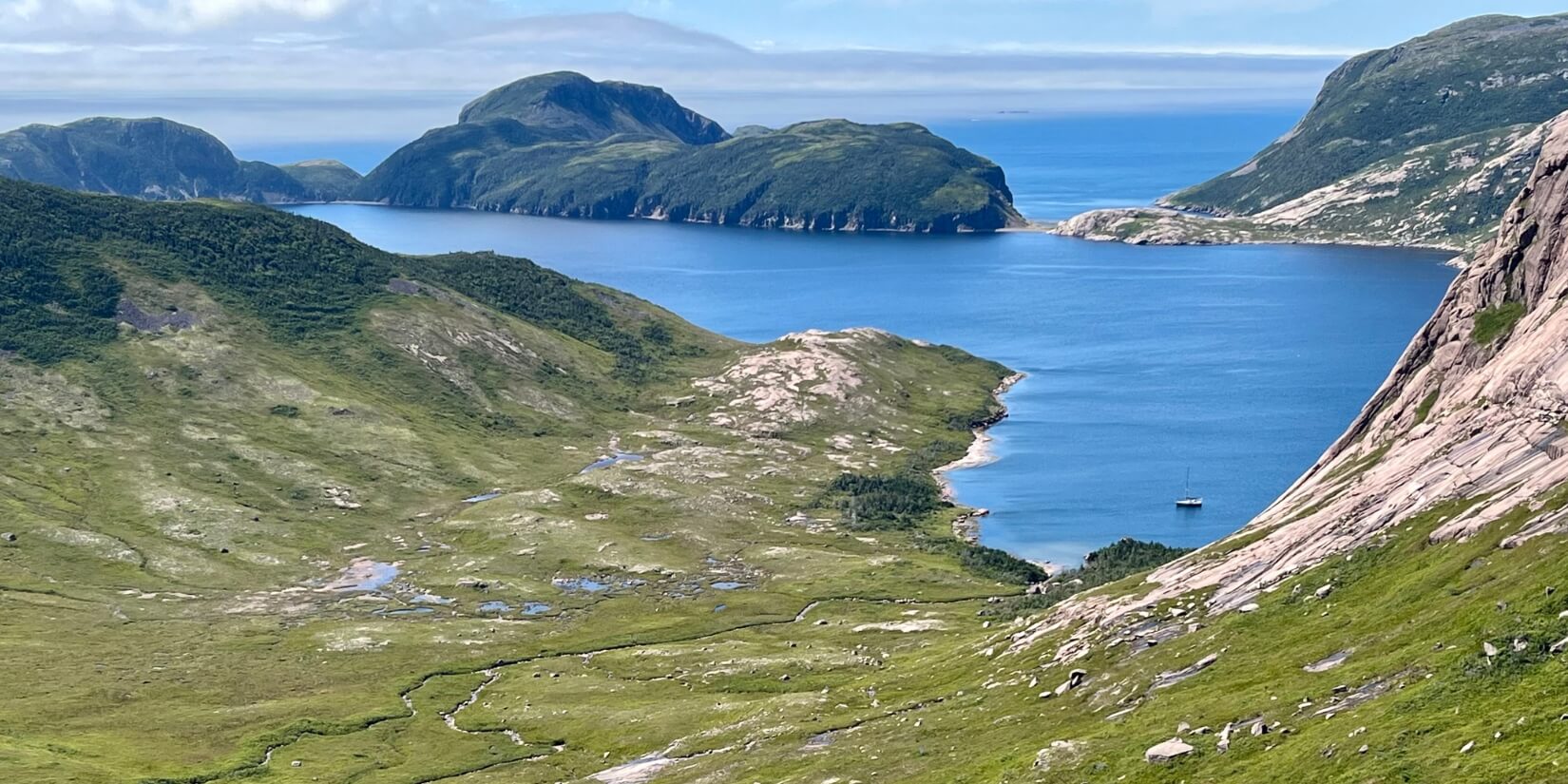
Anne and Hugues are literally so enthused about the Bijagos islands. Situated off the coast of Guinea-Bissau, the islands and islets are under protection as UNESCO World Heritage Sites and host biosphere reserves as well as a huge diversity of ecosystems: From mangroves to savannas, sand banks and palm forests. It´s a paradise for bird-watchers and divers. “It´s ah so beautiful!”, Anne says, “children are so friendly!” With some 30.000 inhabitants, many of them very young, it´s a shame that the recent development has taken such a wrong direction. Maybe more visitors could show a way out? Interesting side-note: The society on the Bijagos islands is based on a matriarchal system, and that could be interesting to take a look at, right?
Essential equipment for sailing in western Africa
Staying connected to the internet is essential for offshore sailors, as Anne and Hugues know all too well. In 2022, Starlink didn’t exist yet, and they both relied on Iridium Go for regular weather updates, navigation, and information. Today, of course, Starlink has become their primary means of connecting to the internet. “SIM cards can also be useful, at least when you’re within range of the GSM network, ” explains Hugues. “We’ve accumulated quite a collection of them now. Sometimes it’s hard to buy them; sometimes we buy them right off the laps of women sitting in the street,” he says with a smile. You often have to show your passport to get one, which can be tricky when certain ports or customs officials hold onto it during entry formalities.
%20(1)%20(1).png)
As for harbors and marinas, Hugues smiles even more: Those simply don´t exist, he says. “You are always at anchor!” In a few locations there are sailing club-like areas, with clubhouses or lounges on the shore, or at least a socializing area with a BBQ-station. “You can also meet other boaters making the stops more worthwhile. They bring the news or have the insights you need for your next sailing leg or stopover destination.” As for finding the best spots to anchor, there are plenty of and it makes sense to ask locals. “What Africa lacks in terms of infrastructure, it makes up with services”, he tells us
“There are always people around you who help in any way thinkable of. In Dakar you will find The Diesel-Man, the Water-Man, Mrs Laundry, markets – the range of products and services is wide. Elsewhere in remote anchorages the friendliness of the people helps, and they would be happy to work for you.
%20(1)%20(1).png)
“When we finally arrived in The Gambia, a small country stretching along the Gambia River, we found two main spots for boaters: Lamin Lodge and Bintang Bolon.” Anne says the anchorages there are very calm, without even a ripple from the ocean. “There’s even a small organization to welcome arriving yachts!” As for the Bijagos Islands, the couple had initially planned to be completely self-sufficient for water, fuel, and food, which of course posed no problem aboard a well-equipped ALLURES . “But we quickly discovered that there were several sportfishing centers, some of which offered a very limited selection of products. Sometimes we could anchor nearby and spend a little time at their camp.” Other ports, like Dakar or Banjul, are very busy due to their commercial activity, and they’re dirty too. In most of these places, you can’t even go inside and have to anchor offshore. “But there’s always a solution, ” she smiles.
The Administrative Implications of Navigation in Africa
One of the points Anne and Hugues often bring up is the organizational effort required to travel “legally” aboard a sailboat. Each country may have its own rules or customs regarding entry and exit, customs, and formalities, and these official rules may be applied differently depending on the official you encounter. “It often takes time to understand the system and navigate it successfully, ” explains Hugues.
“In Dakar and Banjul it took us more than a full day to get the paperwork done. Same in Cacheu but we even had to go to Bissau (more than 50 km away) to another immigration-office to explain our case and to be finally cleared in ».”
It´s often even just one stamp you need, but many: “Customs, navigating permits and immigration, offices are not close to each other and you have to find your way.” Better be prepared, which is why the couple usually starts their research so early, well before departing to a new destination.
.png)
“If you’ve done your research thoroughly in advance, if you have a list of the necessary documents and the addresses of the offices where to get them, most of the legal procedures can be completed in a single day,” Anne confirms. For the Bijagos Islands, it was more complicated. Another boater they met in Dakar had advised them to enter the country via Cacheu, avoiding Bubaque, which was considered too corrupt. But once in Cacheu, they still had to negotiate a “price.” So much for corruption. Some locals fight it; others don’t. “So, even though we tried to avoid it, we were prepared to find ourselves trapped and forced to give a little ‘bakchich.’” “That’s Africa, ” they say with a smile. “Quite an adventure…!”
%20(1).png)
But it´s far from just being a corrupted country, they insist! “Sailing in Casamance, for example, it brings you close to villages and people. They welcomed us and invited us to every party!”, Anne tells us. The crew of VANUILY ended up celebrating with villagers for a wedding, a first birthday of a baby, the end of the rice season and many more.
For example, we spent three full days with a family for the end of the rice season-festivities. A big celebration with beautiful costumes, everybody was there! Rice is delivered in the churches to be redistributed to the poor. And so we helped to grind the grains and prepare the meals with the family. It was an unforgettable experience!”
So indeed, there are some downsides or darker realities you just have to accept, in order to being able to discover the vast richness of beautiful things, nature, people and culture in exchange.
Anne and Hugues´ top tier-list of why you should sail to Africa
With such a vast experience at hand, we ask both which were the most impressive things they had discovered over there – and why could it be a good idea for sailors to go there as well? Anne says:
“We´ve discovered so many things! For example, in the Bijagos, a very different world from ours with a matriarchal society. There are queens ruling villages, deciding what and when to do. Amazing!”
Hugues says that he is still emotionally moved by those smiling and happy children. “Unfortunately we´ve had to witness also great poverty in some very remote villages. We gave out what we could, of course that wasn´t sufficient or enough.” This is Africa, too.
%20(1).png)
“It’s still a very wild place,” they say. “The children run up to you not to beg, but to meet you, to show you their school or their workplace, ” adds Hugues. Anne describes the lush, sumptuous vegetation, with huge, magnificent trees. “We stood in awe beneath immense baobabs and kapok trees, magnificent palm trees, and coconut palms!” Need to unwind for a moment? The beaches are often stunning. “Ilha de Meio is still my favorite anchorage today, with a dreamy, secluded beach, crystal-clear water, golden sand, and birds!” It’s hard to pick just a few must-sees, they say, because there are so many.
%20(1)%20(1)%20(1).png)
Starting in Dakar, the CVD (Cercle de Voile de Dakar) club in Hann Bay would be your port of entry, assisting you with all the necessary formalities upon your arrival in Senegal. “It’s a big city, dirty and noisy, but there’s plenty to see. We spent ten days there.” In Saint-Louis, the couple took a river excursion—not aboard VANUILY due to the sandbars, but on the Senegal River—and the experience left a deep impression on them. In The Gambia, Vanuily was able to sail up the river as far as the Senegambia Bridge, but no further, mast the mast too tall. Mandori Creek is a must-see, they insist, as are Baboon Island and Janjanburegh. “So many wonderful memories come flooding back now that we’re talking about it. And the desire to go back, ” Anne smiles. “If you decide to go to the Bijagos Islands, after clearing customs in Cacheu, the best place to start, in our opinion, would be the small island of Kéré, north of Caravela, ” Anne insists.
%20(1).png)
Asking if they indeed would return one day, both don’t have to think about it very long: “We definitely would sail again to Africa, if our route takes us there in the future. We would of course be careful of where to go to avoid countries where piracy could occur.” Both say that the world is so vast and there are so many places and people to discover ... they can’t go everywhere! “We don’t feel like we have to do a full circumnavigation. Instead, we have discovered the beauty of colder places like Canada or Newfoundland. We are right now sailing back there up north. Quite a contrast, but that´s what we like most about sailing!”
The good thing is, that with a rugged, quick and fully autonomous yacht like their ALLURES 45 this is all no problem: Be it the tropical heat of Africa or the ice-cold freshness of Newfoundland!
FAQ – Sailing in West Africa
Is it safe to sail in West Africa?
Based on Anne and Hugues’ experience, sailing in West Africa can be done safely in regions such as Senegal, The Gambia and the Bijagos Islands. As with any bluewater destination, careful preparation and staying informed about local conditions are essential.
Can West Africa be part of a bluewater cruising plan?
Yes. Anne and Hugues’ experience shows that West Africa can naturally fit into a bluewater cruising itinerary. It offers an alternative to the usual routes, with more remote stopovers and a navigation focused on exploration.
Why choose an aluminum centerboarder for sailing in West Africa?
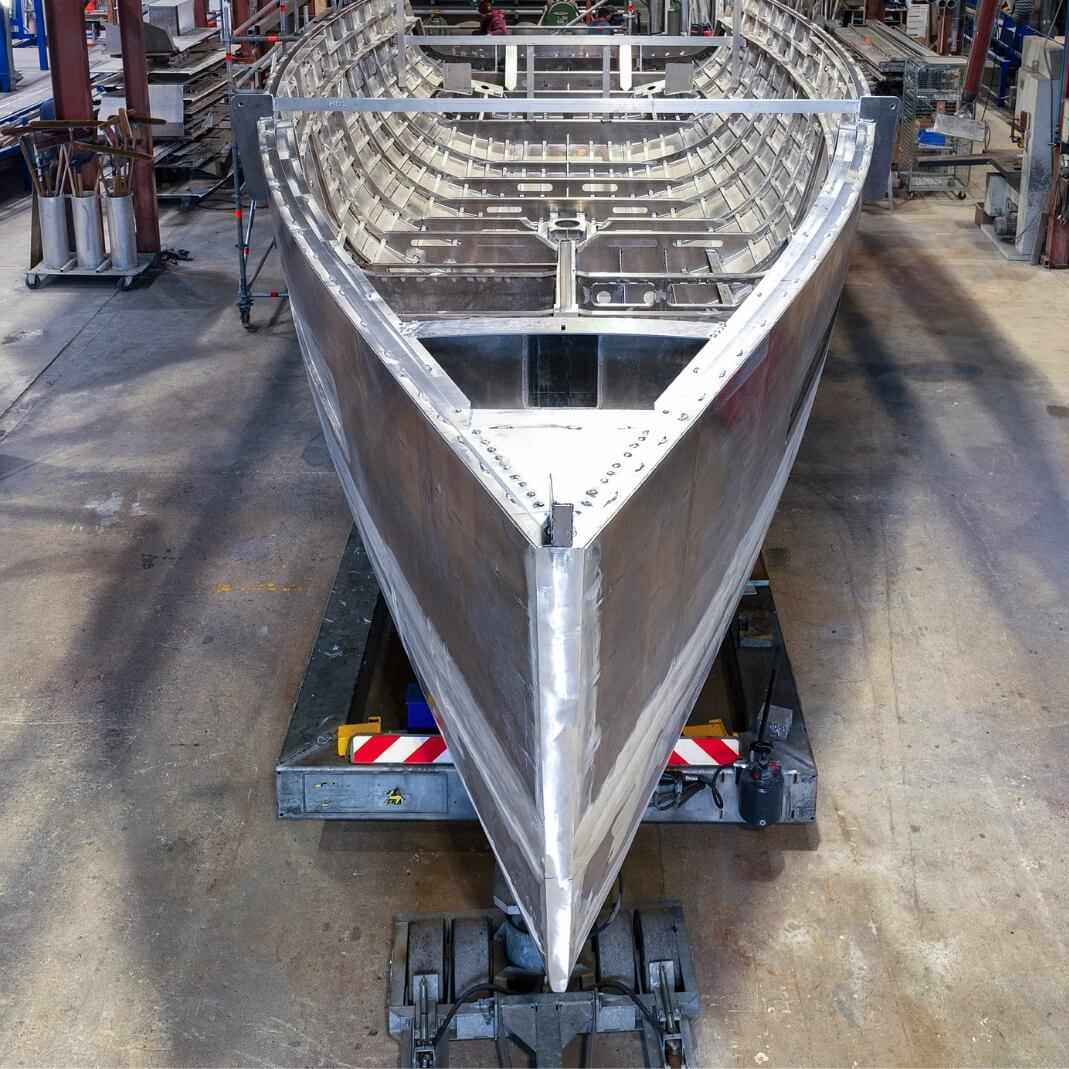
An aluminum centerboarder two advantages that are particularly well-suited to regions such as West Africa. The aluminium hull provides strength and safety, especially in poorly charted areas or at anchor, where the seabed can be uneven. The centerboarder meanwhile, reduces draft, centerboarder access to shallow waters and the ability to anchor closer to the coast or in natural shelters. In regions such as Casamance or the Bijagos Islands, this offers greater freedom of navigation and expands the possibilities for stopovers.
Is autonomy essential for this type of sailing?
Yes. In West Africa, most stopovers are at anchor. Autonomy in energy, water and provisioning directly impacts both freedom of movement and overall comfort on board.
Do you need extensive offshore experience to sail in West Africa?
Not necessarily. This type of project relies primarily on solid preparation. Anne and Hugues built their journey progressively, gaining experience along the way.
What are the main challenges when sailing in West Africa?
Administrative procedures can be time-consuming and complex, with requirements varying by country and port. It is essential to plan ahead for visas, permits, and visits to various government agencies.
Can you anchor easily in West Africa or are there marinas?
Most of the time, sailing is done at anchor. Marina infrastructure is limited, but local services such as water, fuel and assistance are often available, particularly in places like Dakar or The Gambia.
What are the key factors for a successful sailing experience?
Good preparation, understanding local conditions and staying adaptable. Exchanges with other sailors and local knowledge also play a crucial role in both safety and overall experience.
Why choose destinations like West Africa?
To step away from crowded routes, explore less-visited areas and enjoy a more immersive sailing experience. It is a type of journey that emphasizes human encounters, cultural diversity and natural environments.
How does this type of sailing reflect the Allures Yachting philosophy?
It reflects a form of sailing that is free, autonomous and committed. Being able to access remote areas, anchor with confidence and navigate across a wide range of environments is at the core of a yacht designed for bluewater cruising.
What kind of yacht is suitable for a bluewater project like this?
A yacht designed for autonomy, safety and versatility is essential. Anne and Hugues’ experience aboard their Allures 45 highlights the ability of this type of yacht to support long-distance, varied cruising beyond the usual routes.
Are you planning a bluewater cruising project?
Discover the Allures Yachting range and connect with our team to design a yacht tailored to your sailing plans.
.png)
.png)
.png)
.png)
.png)
.png)
.png)
.png)
%20(1)%20(1).png)
.png)
.png)

latest news




latest experiences